

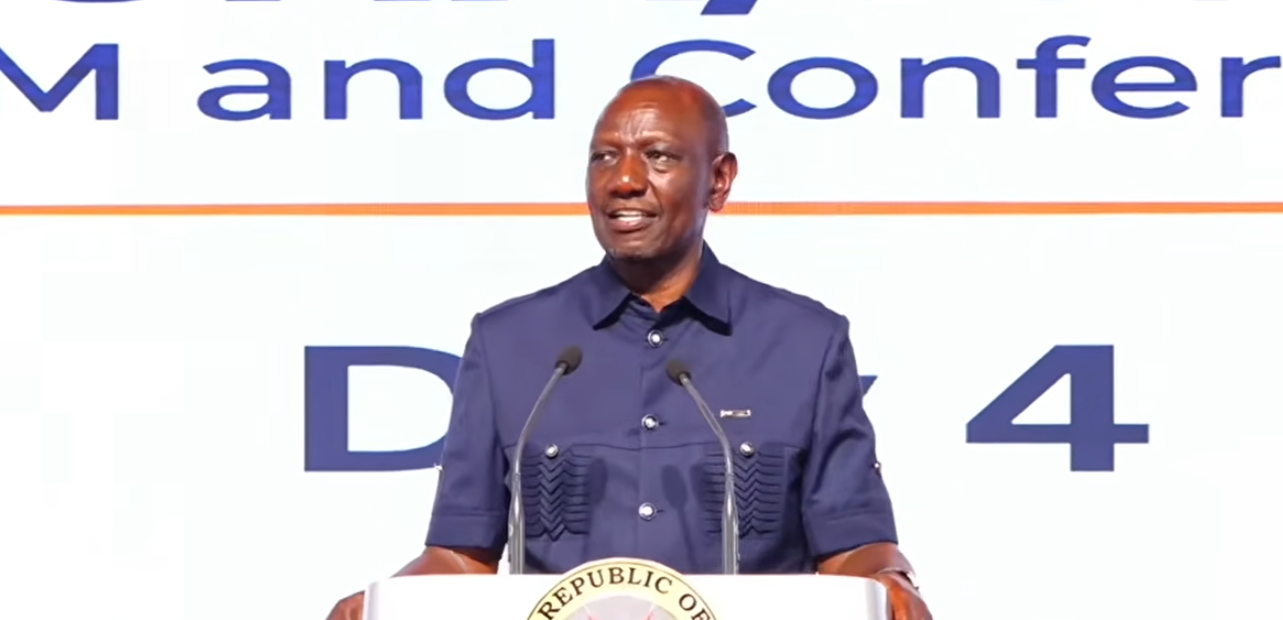
President Ruto cited citizen-generated data to support his call to action and highlight foundational learning as a key area of educational reform. (Image credit: State House Kenya)
Kenya’s President William Ruto asked headteachers to ensure every child leaves Grade 3 able to read, write, and do basic mathematics at the Kenya Comprehensive School Heads Association's annual meeting on 12 November.
President Ruto called on headteachers to prioritise the early years with the best teachers, ensure classrooms are delivered, and lead with integrity.
IPNEd commits to support the Kenyan Parliament to deliver President Ruto’s reforms and ensure every child learns foundational skills.
On 12 November, President Ruto spoke at the close of the 2026 Kenya Comprehensive School Heads Association (KECSHA) Annual General Meeting and Conference in Mombasa, stating that “by 2030, every Kenyan child must be able to read, write, and count” by the end of Grade 3.
The conference brought together around 15,000 school heads, with thousands more joining online, where President Ruto requested Heads of Comprehensive Schools to treat foundational learning as their priority and ensure that learners in the early grades have the best teachers.
President Ruto raised that while children have the right to education in Kenya enshrined in law, learning with comprehension is not guaranteed. He outlined the latest citizen-assessment data from Usawa Agenda’s FLANA Report 2026. The report found that less than 30 per cent of Grade 4 learners could read and understand a Grade 3 story, as well as solve a Grade 3 numeracy problem.
He emphasised that getting the basics right in the early years is the foundation for all later learning and outlined three key priorities for head teachers:
Make Grades 1 to 3 the most protected years in their schools and ensure children in these grades progress in school having learnt how to read, write and do basic mathematics as key to lifelong learning. President Ruto challenged heads to deploy their strongest teachers to Grades 1 to 3, so that learners build understanding, skills and confidence from the start.
Ensure that classrooms are building skills, in line with the Competency-Based Curriculum. Learners should be active participants in their own learning, who engage with and apply what they learn.
Lead with integrity. President Ruto encouraged school heads to manage public funds efficiently, protect children from abuse and discrimination, ensure no child is left behind and, as envisaged in the curriculum framework, work with parents, because no school can succeed alone.
To ensure teachers are valued and supported, President Ruto announced that the government will provide another 4 billion shillings to facilitate the career progression of teachers.
He also announced that, to track progress, the Ministry of Education, the Teachers Service Commission, the Kenya National Examinations Council and county governments will develop an assessment and reporting system.
“We will measure progress every year, and we will publish the results, county by county and school by school, so that every parent can see how far we have come,” President Ruto said.
The President also gave the Ministry and KECSHA 90 days to propose amendments to the Basic Education Act on the governance, staffing and financing of comprehensive schools, which now cover pre-primary to Grade 9.
The announcement comes as Kenya’s National Assembly considers a package of education bills, including the Basic Education Bill (2026), which IPNEd and partners have engaged on to strengthen foundational learning in law.
Public targets, annual data and clear legislation give parliamentarians practical tools to follow progress and hold governments to account, and political leadership from the highest level is igniting that action. IPNEd will continue to support Kenyan MPs and partners as these commitments move from announcement to action.
