

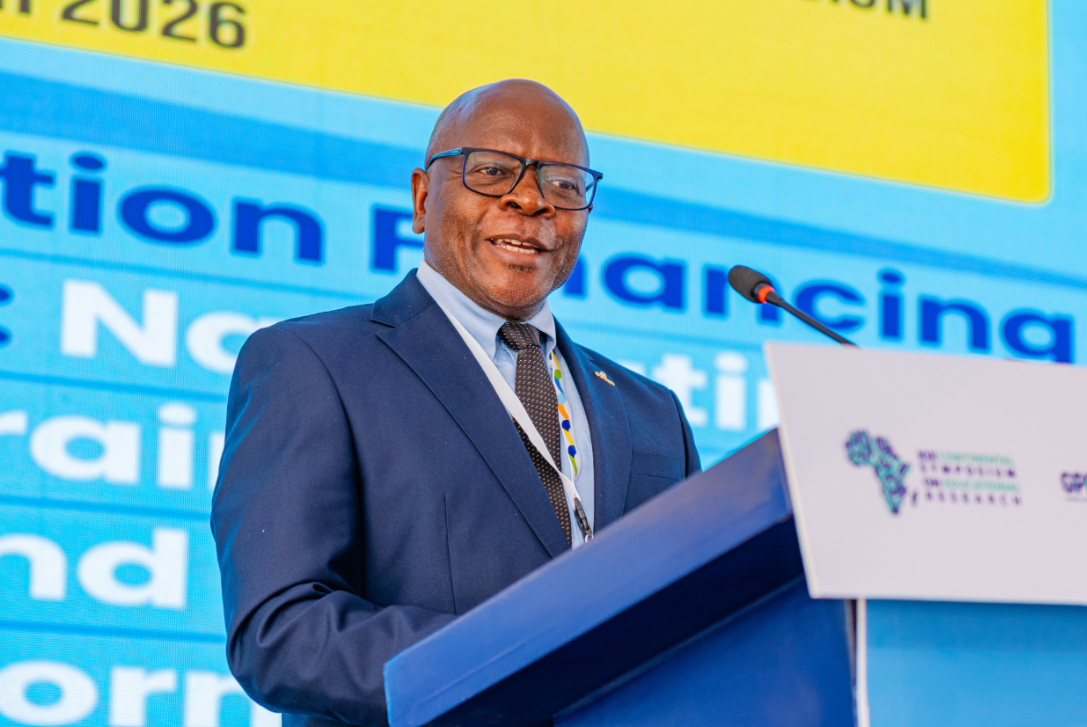
The Hon. Harry Kamboni MP, Chair of the Parliamentary Committee on Education in Zambia, called for more efficient resource allocation for foundational learning. Image credit: GPE KIX
Members of the International Parliamentary Network for Education from the parliaments of Kenya, Nigeria, Senegal and Zambia, as well as a Member from the DRC, attended the 5th GPE-KIX Africa Research Symposium in Nairobi, Kenya, from 21-23 October.
The symposium brought together parliamentarians, government officials, bilateral and philanthropic funders and other stakeholders to explore the constraints and opportunities for education financing in Africa.
From 21-23 October, the Global Partnership for Education (GPE) and the International Development Research Centre held the 5th Education Knowledge and Innovation Exchange (KIX) Symposium in Nairobi, Kenya, hosted by UNICEF.
Under the theme ‘Education Financing in Africa: Navigating Fiscal Constraints, Expanding Demand and System Transformation’, the symposium examined education financing strategies that demonstrate policy uptake and financial commitment and assessed how these can sustain and scale learning.
Despite many African governments committing to ambitious education reforms, the economic environment is tightening, and both rising interest rates and declining external resources are putting even more pressure on domestic financing.
Parliamentarians from across the continent joined government officials from the Ministries of Finance and Education, and education financing experts, to explore how to mobilise, allocate, and use education resources more effectively.
With support from UNICEF, IPNEd members joined the three-day event, spotlighting their work and emphasising parliament's role in approving and allocating public funds.
Delivering the keynote speech at the symposium, Hon Harry Kamboni MP, Chair of the Parliamentary Committee on Education in Zambia, called for more efficient resource allocation, citing MPs' responsibility to ensure accountability and provide oversight of government commitments and spending.
He encouraged stakeholders to work together for more and better financing for education, particularly for foundational learning. “Africa needs greater investment in education. Our children deserve it. Our economies require it. And our collective future depends on it,” said Mr. Kamboni.
“The decisions before us are not simply about how much we spend. They are about what we prioritise, whose needs we serve and whether we are prepared to change financing arrangements that are not delivering results.”
Spotlighting parliamentary action
While addressing systemic financing issues in the education sector, the symposium explored tangible solutions to overcoming issues in Africa’s education financing.
These included financing reforms, budget decisions, and system-level changes that have demonstrably influenced learning, equity, efficiency, and resilience.
Hon. Mark Useni MP, Chair of the Education Committee in the House of Representatives in Nigeria, outlined the important work his Committee has been doing to amend the Universal Basic Education Bill to increase the share of the Consolidated Revenue Fund allocated to education from 2% to 5% of GDP.
Member of the Education Committee in the Kenyan National Assembly, Hon. Abdul Haro MP, called for not only more efficient spending but more equitable financing, particularly for schools and communities that are the furthest behind.
“Our responsibility cannot end when we approve the education budget. We need to follow the money from the national budget all the way to the learner,” he stated, “That means asking whether the allocation is adequate; whether releases are timely; whether the formula reflects the different circumstances of schools; and whether the resources reaching schools are producing the learning outcomes that we intended.”
Parliamentarians from the Democratic Republic of Congo, Hon. Christelle Vuanga MP, and Senegal, Hon. El Hadji Gueye MP, also joined the high-level plenary sessions, emphasising the role of parliamentary oversight and results-based financing in their respective countries.
