

New data shows foundational learning progress growing across Africa
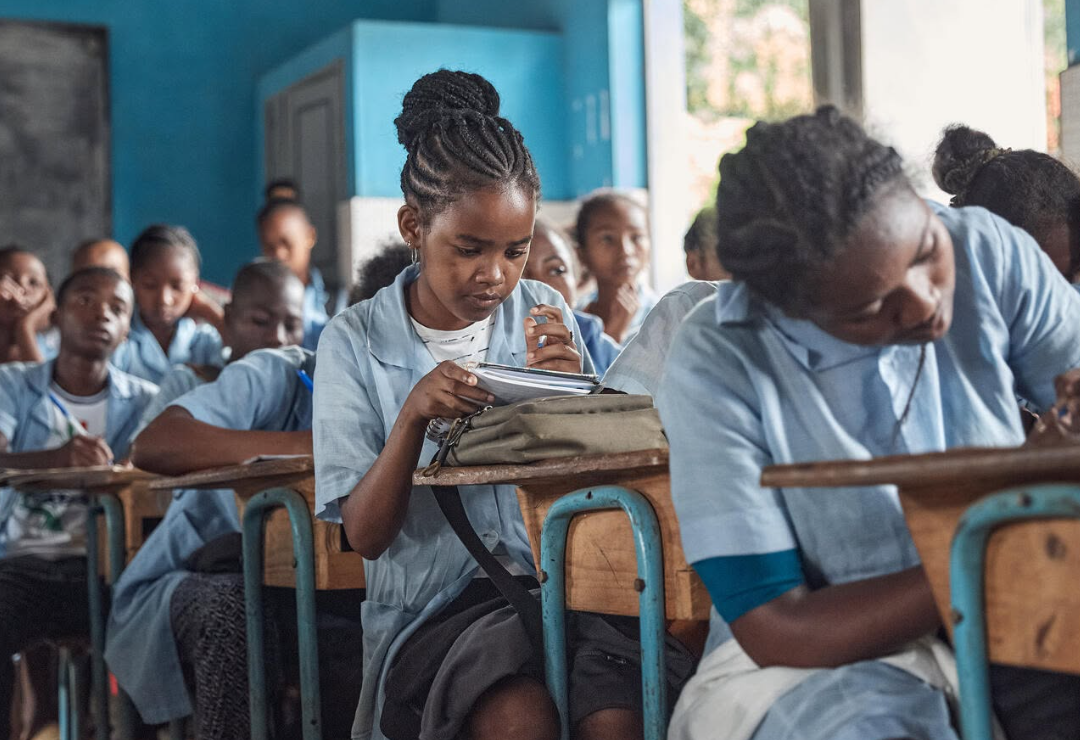
UNICEF and the Hempel Foundation have tracked progress made towards improving foundational learning in 52 countries in Africa. ©UNICEF/UNI912398/Andriantsoarana
The 2026 Foundational Learning Action Tracker (FLAT), launched by UNICEF & Hempel Foundation on 19 October, shows that African countries are making progress in translating assessment data to shape national policy and programmes.
FLAT monitors the actions governments are taking to improve foundational learning, looking at 5 key areas (known as the RAPID framework).
This year’s Africa snapshot covers 52 countries and shows that more is needed to ensure assessment data informs not only policy, but also classroom teaching and learning practices too.
Across Africa, governments are strengthening the policies and systems needed to ensure more children develop foundational literacy and numeracy skills by the end of primary school.
Political leadership and commitment are paving the way for success, and more countries across Africa are setting clear expectations for what children should learn in the early grades, tracking school attendance, and using assessment data to shape education policies and programmes.
New data published this month by UNICEF and the Hempel Foundation show this progress clearly, in the results of the 2026 Foundational Learning Action Tracker.
The report shows that across the 52 African countries tracked, foundational learning is considered “established”, meaning that policies and systems to support learning are largely in place.
However, FLAT also outlines areas of limited progress, outlining that more needs to be done to strengthen implementation using assessment data to translate evidence into better teaching and learning in the classroom.
Tracking action on foundational learning
The FLAT tracker monitors government actions to improve foundational learning across 5 key dimensions, known as the RAPID Framework:
Reach every child and keep them in school
Assess learning levels regularly
Prioritise teaching the fundamentals
Increase the efficiency of instruction
Develop children’s psychosocial health and well-being.
In 2026, FLAT collected data from 123 low- and middle-income countries. Its Africa snapshot covers 52 countries, combining survey responses from 37 countries with UNICEF data on education systems across all 52.
With four years of data now available, FLAT provides an increasingly useful picture of how government action on foundational learning is developing over time.
Key findings show strong foundations in place across Africa
FLAT shows governments are making strong progress on foundational learning, including developing clearly defined learning benchmarks, nationwide attendance tracking and a growing use of assessment data for intervention programmes and education policy.
Among the 14 African countries with comparable data since 2023, the proportion using assessment data nationwide to inform foundational learning programmes increased from 21 per cent in 2023 to 79 per cent in 2026.
There has been similarly strong progress in monitoring whether children are in school. The proportion of countries with nationwide mechanisms to collect, report and act on information about student attendance increased from 43 per cent to 79 per cent over the same period.
Assessment evidence is also increasingly informing national-level decisions. Ninety-three per cent of these countries now report using assessment data nationwide to inform education policy and planning.
And lastly, governments are also increasingly setting clear expectations for children’s learning. Across the wider group of 37 African countries responding to the 2026 survey, 81 per cent reported having clearly defined foundational literacy and numeracy learning outcomes or benchmarks in their early-grade curriculum nationwide.
These are important building blocks to ensure all children are learning how to read, write and do basic mathematics in primary school.
Using new evidence to improve classroom practice
While FLAT shows progress in particular areas, it also outlines where greater attention is now needed to continue to improve learning outcomes.
One of the biggest gaps is the use of assessment data nationwide to inform classroom practice. This means understanding how children learn and using that information to change how they are taught.
Closing the gap will involve ensuring teachers have the capacity and support to use evidence about children’s learning in their teaching, and using evidence-based approaches, such as targeted instruction, to improve learning.
The report highlights instructional leadership, coaching, formative assessment tools and teacher capacity-building as particularly important.
Regular assessment also remains an area for further progress. Among the countries that have already established nationwide foundational learning benchmarks, only 30 per cent report conducting an annual, nationally representative large-scale assessment of reading and/or mathematics in the early grades.
Building on this progress and addressing the gaps, the priority is now to strengthen education systems to deliver on learning outcomes using the latest data.
Continued political leadership will be critical to turn this progress into action at scale, ensuring that stronger policies, better data and proven approaches translate into improved learning for every child.
