

Commonwealth Parliamentary Association launches landmark 2026-2029 Strategic Plan with renewed focus on sustainable development
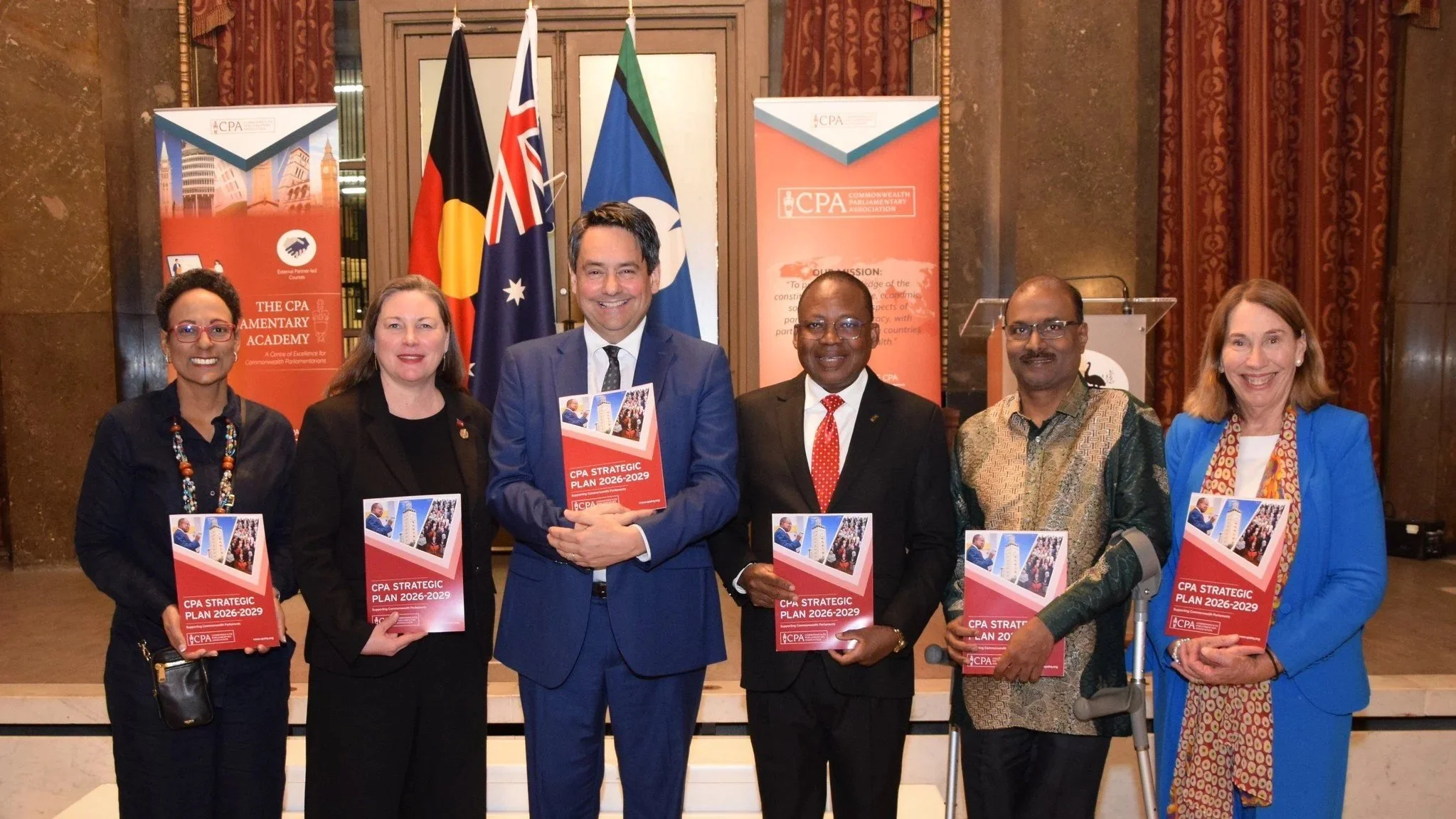
The plan was unveiled at a launch event in London in February.
The Commonwealth Parliamentary Association (CPA) has officially unveiled its Strategic Plan for 2026-2029, charting a bold new course for 180 parliaments and legislatures across the globe.
Launched in February 2026, the document outlines a vision to deepen the Commonwealth’s commitment to democratic governance while placing a transformative emphasis on the role of legislatures in achieving the United Nations’ 2030 Agenda for Sustainable Development.
The launch took place at a “pivotal moment” for parliamentary democracy, as described by the Chairperson of the CPA Executive Committee, Hon. Christopher Kalila MP of the Zambian National Assembly.
A major highlight of the new strategy is the CPA’s transition to an organisation with international status, a milestone intended to amplify its voice on the global stage and enhance its engagement with international partners.
A renewed urgency for sustainable development
At the heart of the 2026-2029 strategy is a clear mandate to support parliaments as “change-makers” in the pursuit of the Sustainable Development Goals (SDGs).
CPA Secretary-General Stephen Twigg, who co-founded the International Parliamentary Network for Education (IPNEd) when he was a member of the UK Parliament, noted that with the 2030 deadline fast approaching, many countries face significant hurdles due to climate change, economic shocks, and geopolitical instability.
The Strategic Plan recognizes that parliaments are “integral to reversing this trajectory” through their core functions: legislative action, budget scrutiny, and oversight of national implementation efforts. By focusing on these areas, the CPA aims to ensure that no community is left behind in the quest for inclusive development.
Attending the launch in London, the executive director of IPNEd, Mr Joseph Nhan-O’Reilly, welcomed the focus on supporting parliaments to achieve the SDGs.
“Now more than ever, democracy needs strong parliaments and parliamentarians who can exercise their mandates, represent the people, defend their human rights and interests, make decisions based on evidence, and hold the executive to account. The more effectively all these things can be done, the closer we will get to achieving the goals set out in Agenda 2030.”
Collaboration for better governance
The strategy emphasises that these goals cannot be achieved in isolation. The CPA plans to forge stronger alliances with regional and international bodies, such as the United Nations, the Inter-Parliamentary Union (IPU), and the United Nations Development Programme (UNDP), to maximise impact.
“The International Parliamentary Network for Education enjoys a strong working relationship with the CPA and looks forward to supporting parliaments across the Commonwealth in delivering on SDG 4: quality education for all,” said Mr Nhan-O’Reilly.
