

Supporting girls to stay in school is key to ending early marriage
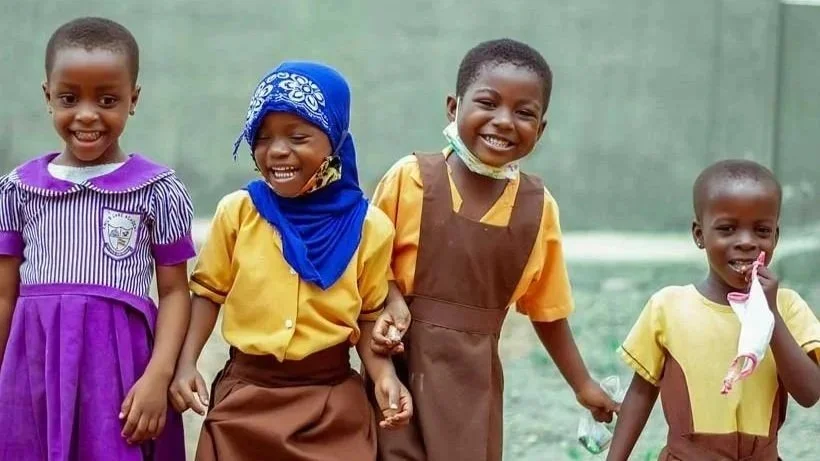
Protecting girls’ education and preventing early marriage are therefore not separate from growing women’s political leadership, but they are two of the conditions that make it possible.
Neema Lugangira, Secretary General of Women Political Leaders and Africa continental representative for the International Parliamentary Network for Education, makes the case for supporting girls to stay in school as one of the best ways to prevent early marriage.
Across sub-Saharan Africa, 34 million adolescent girls of secondary school age remain out of school. If secondary education is universally achieved, evidence shows the child marriage could be virtually eliminated.
Ms. Lugangira’s article is the first in a series of opinion pieces by IPNEd’s women member parliamentarians to mark International Women’s Day during the month of March.
In Dodoma, the capital city of my country, Tanzania, stepping into a public secondary school at the start of the term brings a moment of optimism.
Classrooms are packed with girls and boys, ready to learn as a result of our Free Education Policy, often on shared benches, sharing textbooks, but eager to participate and progress.
In the lower grades, girls’ and boys’ enrolment is nearly equal. Yet as students move through secondary school, the balance begins to shift and by upper secondary, girls face higher dropout rates and lower transition rates.
This is true across sub-Saharan Africa. Approximately 34 million adolescent girls of secondary age remain out of school, and girls are less likely than boys to complete secondary education, often due to early marriage, early pregnancy and domestic responsibilities.
In 2023, the completion rate in lower secondary education for girls in the region was on average 47 per cent, but fewer than 30 per cent of girls completed upper secondary.
The higher up the education ladder you go, the fewer girls there are in the classroom than boys.
Early and child marriage is one of the biggest factors that stop girls from attending and completing education, and a lack of access to education fuels early marriage.
Every year, 12 million girls are married before they turn 18. That’s 28 girls every minute – losing their childhood, their education, and often their health to a practice that violates their fundamental rights.
Keeping girls in school is one of the most effective ways of delaying marriage. On average, the likelihood that a girl is married or has a child decreases by 6 percentage points for every additional year she remains in secondary education.
This means that if universal secondary education were achieved, child marriage could be virtually eliminated, and the prevalence of early childbearing could be reduced by up to three-fourths.
Supporting girls to return to school
Once a girl is married, continuing education becomes far harder. Many are expected to leave school immediately, and others drift out during the preparatory period before marriage or shortly after, as domestic responsibilities expand and stigma grows.
Child marriage often results in adolescent pregnancy, and pregnant girls may drop out or be excluded due to national laws, weak re-enrolment policies or social pressure.
In Tanzania, the government announced the Education Circular No. 2 of 2021, which ended the discriminatory ban that prevented pregnant girls and adolescent mothers from re-entering school.
This was a significant shift, yet too many girls still drop out, and the practicalities of re-entry remain difficult.
Human Rights Watch reported last year that, despite this Circular, administrative barriers for girls to re-enrol after pregnancy remain.
Preventing girls from dropping out in the first place remains the best protection and the best way to stop child marriage.
Prioritising girls’ education has wide-reaching benefits
Ending child marriage is vital to gender equality: it improves women’s health and well-being, increases their earnings and standards of living, and strengthens women’s agency and decision-making.
As a female leader, I see education as foundational to women’s representation in politics and leadership, which is why I remain committed to the International Parliamentary Network for Education, so that together we can create an enabling environment for girls to thrive in education and unlock their full potential.
The pipeline of future women leaders is built over years, especially in our classrooms. When a girl is removed from school for marriage, we not only lose a student, but we may lose a future parliamentarian, minister, entrepreneur, or community organiser.
Protecting girls’ education and preventing early marriage are therefore not separate from growing women’s political leadership, but they are two of the conditions that make it possible.
But keeping girls in school also has wider economic benefits for individuals, communities and nations as a whole. Early marriages usually take place at the very stage when learning yields the highest returns, truncating skills and pushing many into unpaid domestic work or low-productivity informal jobs instead of the formal workforce.
This slows human capital growth, leaves labour markets less skilled, and makes it harder to move into higher value-added sectors.
Investing in girls’ health, education and empowerment raises lifetime earnings and national productivity. Closing gaps in education, employment and decision-making could add up to 1 trillion USD to Africa’s GDP by 2043.
If Africa is to build the growth, resilience and innovation it is capable of, we cannot afford to lose girls’ potential in adolescence.
The call to action is clear: keep girls in secondary school, remove barriers to completion and re-entry, and align laws and education policies with girls’ rights.
As we mark International Women’s Day, let’s commit to protecting the pathway that makes leadership possible: girls’ right to education.
Neema Lugangira is the Secretary General of Women Political Leaders, the global network of women politicians, whose mission is to increase both the number and influence of women in political leadership.
She is also the Africa continental representative for the International Parliamentary Network for Education and a former Member of Parliament in Tanzania and has played a leading role in several global and regional parliamentary organisations, including the Global Board of the Parliamentary Network on the World Bank and IMF.
This article was originally published by Modern Diplomacy on 6th March, 2026.
