

IPNEd joins advocates working to ensure every child learns
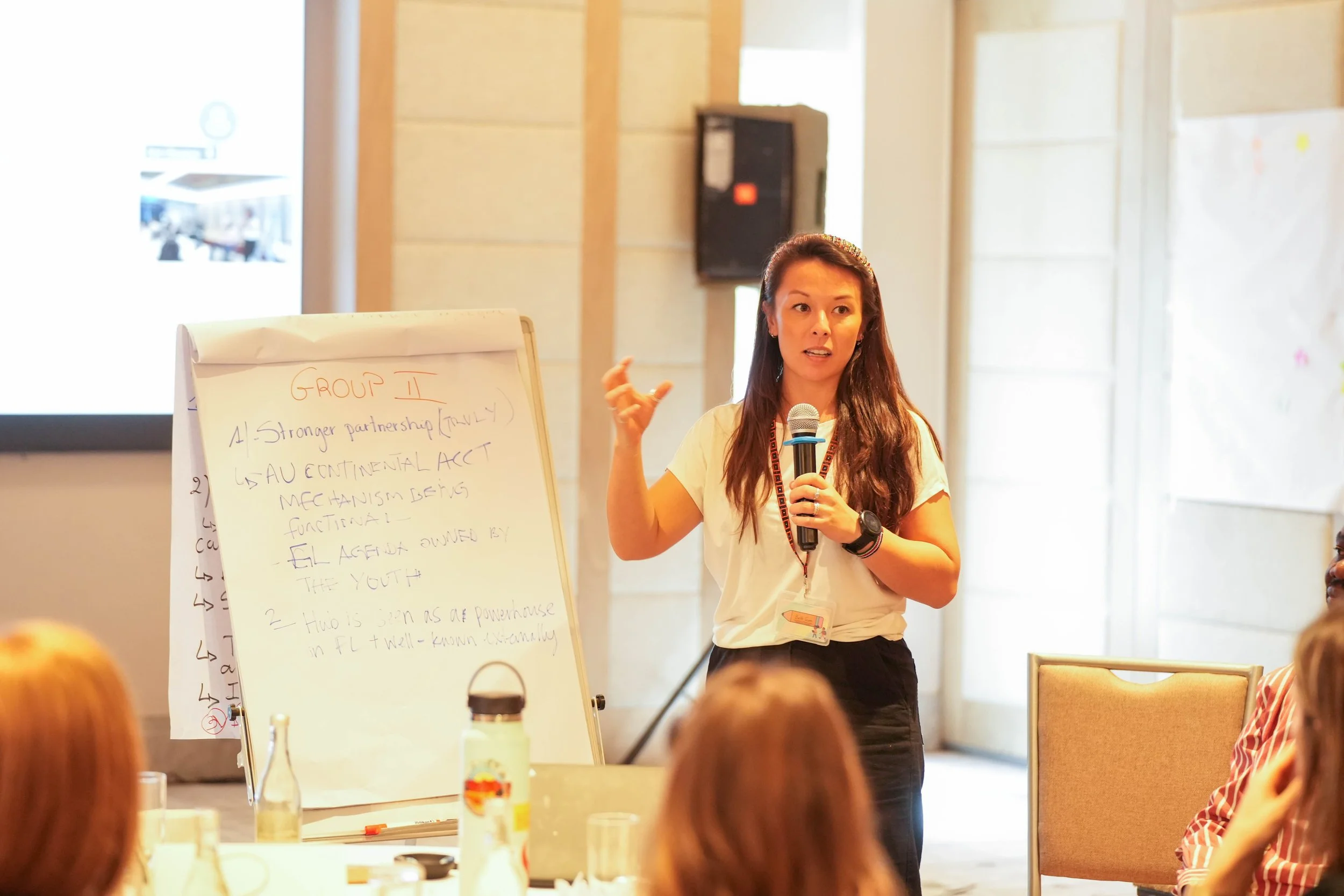
IPNEd representatives, including Beth Gum, spoke during panels and presentations at the convening.
In February, the Foundational Literacy and Numeracy (FLN) Hub—a coalition of organisations working to improve early-grade learning outcomes—met in Nairobi, Kenya to launch the next phase of its work together.
As a member of the Hub, IPNEd is working to support members of parliament to understand the challenge and to take action in their parliaments to accelerate learning outcomes.
Making the case for parliamentary engagement
Engaging parliaments as institutions and members of parliament as individuals are both powerful ways to drive the changes necessary to improve foundational learning.
But parliamentary advocacy is often overlooked, and the full potential of engaging parliaments across Africa on this issue has yet to be widely explored.
As part of a panel discussion on harnessing ecosystems and diverse voices for learning, Beth Gum, Senior Policy and Advocacy Adviser at IPNEd, was invited to speak about the importance of engaging parliamentarians.
“Parliaments have unique functions that are separate and distinct from governments,” she shared.
“They are responsible for making laws, allocating public funds, monitoring what the executive does, and representing their constituents. Parliamentary advocacy has to include well-considered recommendations that help drive political action through these specific functions.”
Other panellists included Shariq Akhund from the Secretariat for the Global Coalition for Foundational Learning, Olawunmi Ola-Busari from the ONE Campaign, Izzy Boggild-Jones from the Gates Foundation, and moderator Santos Akhilele from Human Capital Africa.
Together, the panel outlined the importance of engaging diverse stakeholders, from parliamentarians to young people, to a wide range of donors and philanthropic organisations.
Growing demand from a wide range of voices helps to profile an issue and showcase its relevance.
And when demand comes from different communities on different issues, having a collective voice on a single issue enables advocates to make a clear case for action.
A shared vision for advocacy in Africa
The two days together were an opportunity for partners to engage in dialogue and reflect on progress and shortcomings in our collective advocacy over the past few years, as well as grow a shared vision for future work together.
In a session designed to map our ecosystem, Joseph Nhan-O’Reilly, Executive Director of IPNEd, outlined IPNEd’s work.
“Our approach to working with parliaments is to collaborate with and through civil society organisations so that our policy asks are informed by local demand,” he shared.
“We welcome any opportunity for engagement with partners in Africa, who are working to ensure every child learns to read, write and do basic mathematics in the early grades of primary school, and supporting their legislators to take action.”
Moving forward, the new FLN Hub host, Speak Up Africa, will continue to bring Hub members together.
United behind a common goal, the advocacy landscape for foundational learning globally has never been stronger.
Through our sustained efforts, this has the potential to turn commitments into action and drive the political will necessary to improve learning outcomes for all children across Africa.
