

MPs speak up for campaign to renew international cooperation for education
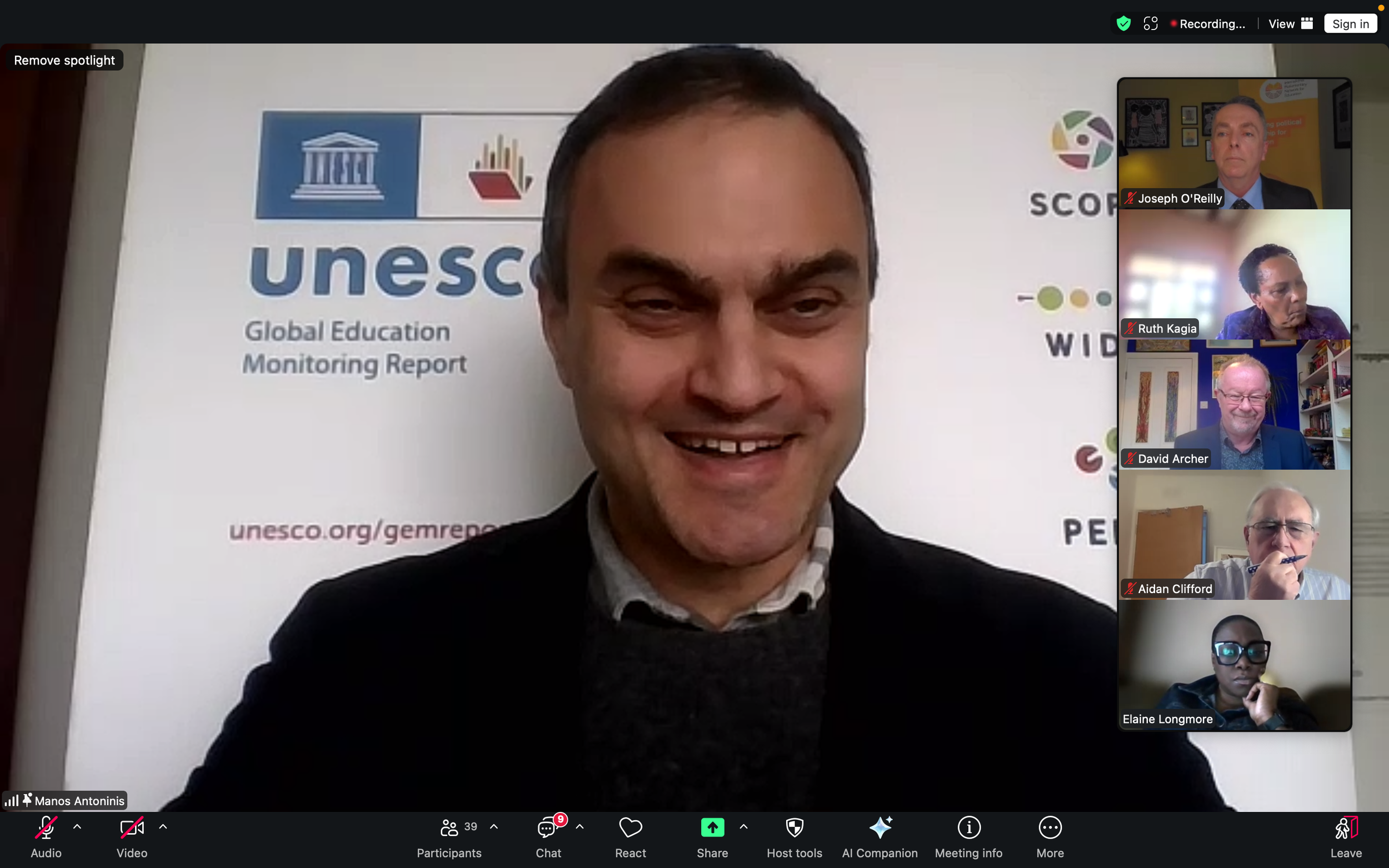
Speakers included Manos Antoninis, director of the Global Education Monitoring Report, alongside other civil society leaders and MPs.
Over 80 MPs and civil society leaders registered to join IPNEd’s latest event.
The high-level discussion on international cooperation for global educational progress took place on 29th January 2026.
Over the course of an hour and a half, we heard from parliamentarians from six different countries.
At IPNEd’s latest event for MPs, all of our speakers were clear about the challenges that education faces right now. In an increasingly unstable global context, multilateralism is under attack.
That means politicians need to go back to first principles: the recognition that education is a universal human right, and each country has a responsibility to advance that right.
However, the amount of official development assistance (ODA) spent on education has radically dropped, said Manos Antoninis, director of the Global Education Monitoring Report from UNESCO.
“Education is seen as a lesser priority because education does not generate results quickly,” he explained.
He reminded MPs that education is a “global public good” which can pay dividends when governments invest for the long term.
David Miliband, CEO of the International Rescue Committee and former UK Foreign Minister, reiterated the importance of financing development even in times of crisis.
“If you want to secure a country, you need an army. But if you want to build a community and a civilisation, you need education,” he said. “There are more resources to do more good than at any other time in human history, and shame on us if we don’t use them well.”
Other speakers drilled down into the specifics of education financing.
David Archer, Head of Programmes and Influencing at ActionAid and Stakeholder Convenor for the finance track of the Transforming Education Summit, spoke about the importance of progressive taxation and international debt relief.
“The servicing of debt massively exceeds spending on education in more and more countries,” he said.
He ended by calling for international cooperation to create a more fair and sustainable financial system.
Why education still matters
Ruth Kagia, High-Level Envoy and Advisor at the Global Partnership for Education and former Deputy Chief of Staff to the President of Kenya, spoke about the impact of education on every level of society.
“It’s the foundation of everything else we want to achieve,” she said. “Education is the only thing that can achieve economic, social, and security goals all in one go.”
David Miliband shared his experience of meeting a woman who had been widowed by the conflict in Sudan, but remained determined to send her children to university.
“One of her children was already at the University of Juba in South Sudan,” he recalled. '“These are realisable dreams, not utopian dreams, and I think it’s our job to help make them happen.”
IPNED members speak up for international cooperation
Other MPs on the call intervened to share their own perspectives.
Bambos Charalambous MP, Chair of the UK’s All-Party Parliamentary Group on Global Education, described his work on a new legislative bill for international debt relief and forgiveness.
Sven Clement MP of Luxembourg, Chair of the Parliamentary Network on the World Bank and the International Monetary Fund, called for better and more transparent development financing.
Cecilia Baltazar, member of the National Assembly of Ecuador, spoke about her work to improve access to school for indigenous children. She noted that legislation can only go so far when there is a lack of global education financing.
Naheed Farid, a former MP from Afghanistan who now lives in exile, reminded listeners that it has been over 1,000 days since the Taliban blocked girls and women from accessing their right to education. “This is not just a national crisis,” she said, “international cooperation is essential.”
Mehnaz Akbar Aziz, former MP and Justice Minister for Pakistan, spoke about the importance of international cooperation in improving the quality of education, as well as access and financing. She pointed to the example of ending corporal punishment in schools as a way to increase uptake of education.
The discussion closed with a rallying call for MPs to sign IPNEd’s call to action on international cooperation for educational progress. The declaration is still available to sign in English, French, and Spanish.
