

IPNEd submits evidence on learning to the Zambian parliament
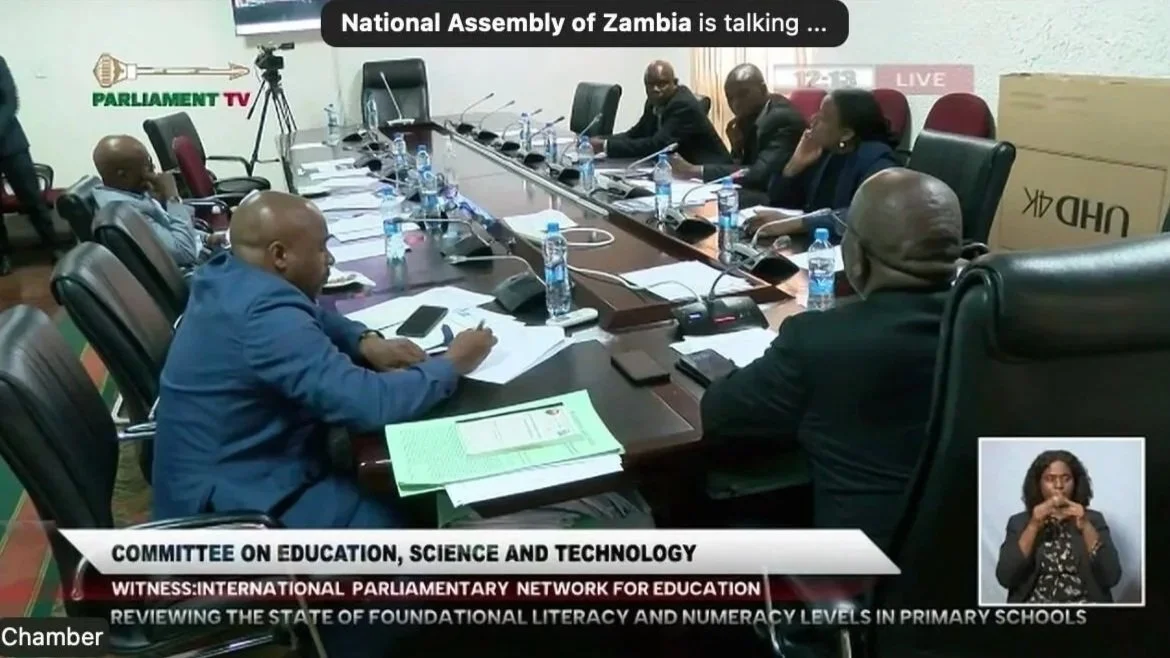
Beth Gum, on behalf of IPNEd, commended the parliament in Zambia for taking action on learning through the Catch-Up programme.
A new inquiry into early-grade literacy and numeracy has begun in Zambia.
An IPNEd representative attended the inquiry to give expert global evidence.
On Monday 19 January, the Zambian parliament called forward Beth Gum, IPNEd’s Senior Policy and Advocacy Adviser, to present evidence during their inquiry into early-grade literacy and numeracy.
The investigation is being undertaken by the Parliamentary Committee on Education, Science and Technology, led by Chairperson Hon. Harry Kamboni MP.
Ms. Gum submitted global evidence based on the key objectives of the inquiry, which are to:
Understand the current levels of foundational literacy and numeracy in primary schools;
Investigate how well teachers are trained and supported to teach foundational literacy and numeracy effectively;
Examine the availability and quality of teaching and learning materials used in early-grade reading and mathematics; and,
Explore the urban-rural disparities in literacy and numeracy outcomes, as well as the equitable provision of resources and the deployment of qualified teachers.
Presenting existing evidence on these four areas, Ms. Gum emphasised the importance of equipping teachers with the right knowledge, skills and strategies to teach children how to read and highlighted the gains of using evidence-based practices in classrooms, including progress under the Ministry of Education’s Catch-Up programme.
“Zambia’s progress is well recognised in international fora due to the progress being made with the Catch-Up programme and the high-level commitment from President Hichilema, who was named the world’s first foundational learning champion in 2024,” shared Ms. Gum.
The Zambian parliament’s inquiry comes at a time when a broader cohort of political leaders across Africa is taking action for foundational learning.
“Political commitment must continue to translate into action,” encouraged Ms. Gum.
“The National Assembly is rightly positioned to oversee steps made towards President Hichilema’s commitment to catalyse progress and ultimately ensure that every child in Zambia is learning at their expected level. Doing this will unlock the future for Zambia’s young people, helping them to build strong foundations from an early age to continue learning and growing to their fullest potential.”
The inquiry is ongoing until Sunday 25 January, after which witness submissions will close and the Committee will prepare a report on its findings.
The report will include a list of recommendations to the Ministry of Education, to which the Minister is expected to respond and enact the suggestions from parliament.
Listen to part of Ms. Gum’s submission on the National Assembly of Zambia’s Facebook page.
