

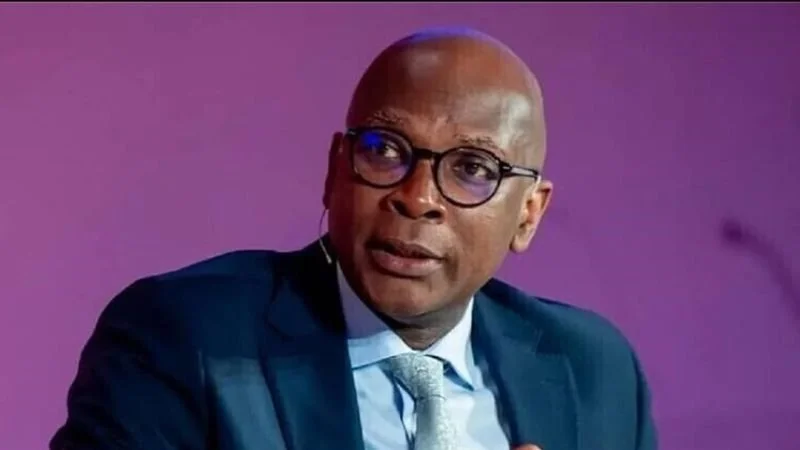
Minister Sackey wrote that the new optional protocol would enshrine the right to free secondary education, as well as early years care and pre-primary education.
Conrad Sackey, Minister of Education for Sierra Leone, wrote in support of a new optional protocol for the Convention on the Rights of the Child.
The optional protocol would enshrine the right to free early years care, pre-primary education, and secondary education.
A new human rights treaty which recognises pre-primary and secondary education as part of the right to education will help accelerate the expansion of educational opportunities, argues Sierra Leone’s Minister for Education, Conrad Sackey.
Writing in Modern Diplomacy this week, he called on countries around the world to support the development of a new optional protocol for the Convention on the Rights of the Child.
“In just three weeks, we will start the final four-year countdown to 2030, when the Sustainable Development Goals (SDGs) should have been achieved,” Minister Sackey wrote. “[But as] the due date of the SDGs approaches, there is still a wide gap between what we committed to and what we have achieved.”
In 2025, almost half of all children miss out on early childhood education. The lack of opportunity is even starker in low-income countries, where just one in five children has access to preschool.
Attendance and achievement at secondary education level are also a concern.
“Secondary education is… increasingly important for success in today’s world,” the minister noted. “Children with secondary education are more likely to find work as adults, earn more, and escape or avoid poverty.”
While the deadline for SDGs is fast approaching, they still have no force in law. Countries choose whether to review their own progress, and there’s no mechanism for children to challenge governments which fail to deliver free education at pre-primary, primary, and secondary level.
“A strong and clear legal standard in a human rights instrument would have the force of law, be subject to independent monitoring mechanisms, and need not be limited to a specific time period [like the SDGs],” said Minister Sackey.
His government, alongside Luxembourg and the Dominican Republic, moved a resolution at the UN Human Rights Council calling for the development of just such a law.
“I am delighted that the resolution was co-sponsored by 49 additional states,” said Minister Sackey. “I urge other UN member states to join Sierra Leone and the other countries supporting an Optional Protocol on the right to education.”
