

MPs have vital role in helping end all forms of violence against children in and through schools
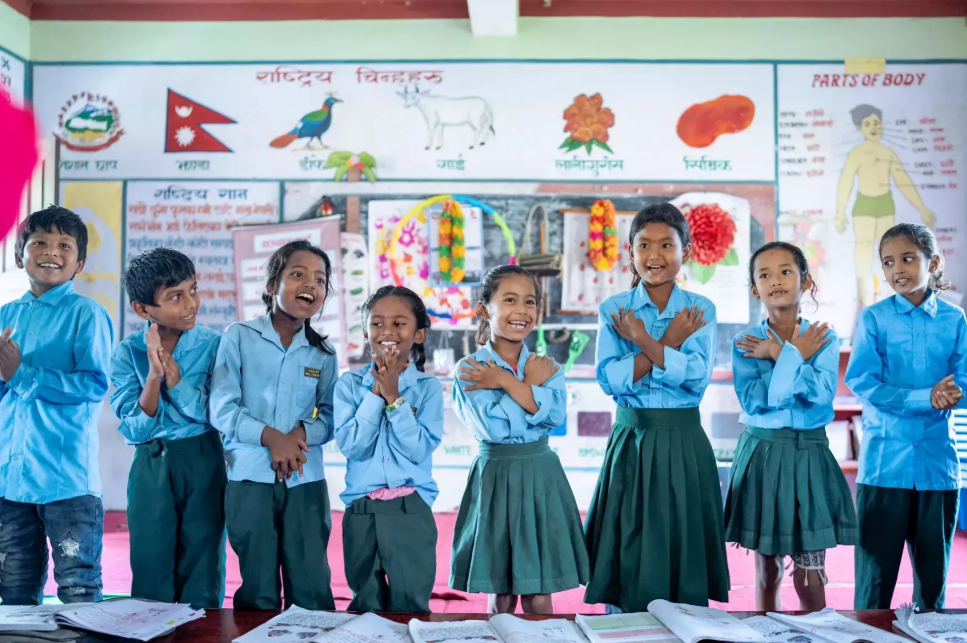
Over 240 million children experience violence in and around their schools, but the Safe to Learn Call to Action provides Governments with solutions to ensure every child is safe to learn. ©UNICEF Nepal/2025/Rupadhayaye
Millions of children experience violence in and outside of school, significantly impacting attendance, learning and wellbeing.
Action to end violence against children is building in advance of the second Global Ministerial Conference, which will take place from 16-19 November in Manila, Philippines.
IPNEd urges MPs to encourage their governments to lead, fund and deliver on the promise to ensure that every child is safe to learn.
More than 240 million children experience violence in and around their schools. That’s larger than the entire population of 229 of the countries in the world.
Children can experience violence in and outside of school, both in person and online, and it can manifest in many different forms, including:
Harassment
Bullying, including cyberbullying
Corporal punishment
Exclusion
Abuse
Child Labour
Not only does abuse of all forms put children’s immediate safety at risk, but violence also undermines children’s confidence, sense of safety, and their ability to learn.
Safe to Learn Call to Action
Urgent political commitments and investments are needed to implement and expand proven approaches to prevent, mitigate, and respond to violence against children in, around, and through schools.
The Safe to Learn Call to Action outlines five key areas, with proven solutions and measurable benchmarks, for national governments and education actors to take action to ensure every child is safe to learn.
Implement policy and legislation
Strengthen prevention, risk mitigation and response in education systems and schools
Shift social and gender norms and promote behavior change
Invest resources effectively
Generate and use evidence
To date, 20 countries have endorsed the Call to Action, but the aim is for every country to do so.
“Endorsing the Safe to Learn Call to Action is a powerful opportunity for governments to signal a national commitment to making schools safe, inclusive, and enabling spaces where every child can learn free from violence,” said Joseph Nhan-O’Reilly, IPNEd’s Executive Director.
“When countries endorse, it places them at the heart of a global movement, while offering a platform to showcase progress, highlight national achievements, and inspire others.”
Endorsement also unlocks access to technical support from a coalition of partners, and the potential to mobilise additional resources.
IPNEd is encouraging members of parliament to urge their governments, through the Minister for Education, to endorse the Call to Action.
Action to end school related violence
At the first Global Ministerial Conference on Ending Violence Against Children held in Bogota in 2024, countries committed to implementing three Breakthrough Strategies to accelerate global action to end violence against children.
One of these—Safe and Enabling Schools—focuses specifically on transforming education systems so that schools are safe, inclusive, and empowering environments for every child. More than 45 countries pledged to take action to ensure safe and enabling schools.
The second Global Ministerial Conference on Ending Violence Against Children is planned for November 2026 and will be hosted by the Philippines.
Governments and organizations have submitted over 120 pledges promising transformative action to end violence against children.
MPs are encouraged to review the pledges their government has made and ask for an update on implementation.
Speaking in advance of the Ministerial Conference, the Prime Minister of Sri Lanka and Ministers of Education from Sierra Leone and Zambia shared powerful reflections on their progress towards ensuring safe and enabling schools for every child.
From strengthening whole-school approaches and teacher training, to improving reporting and response mechanisms for children at risk. Each Minister underscored the shared conviction that safety is foundational to learning, well-being and inclusion.
Their messages also serve as a reminder that progress is possible when governments, partners and communities work together with urgency and clarity of purpose.
