

Two concrete actions to advance the rights of Afghan girls
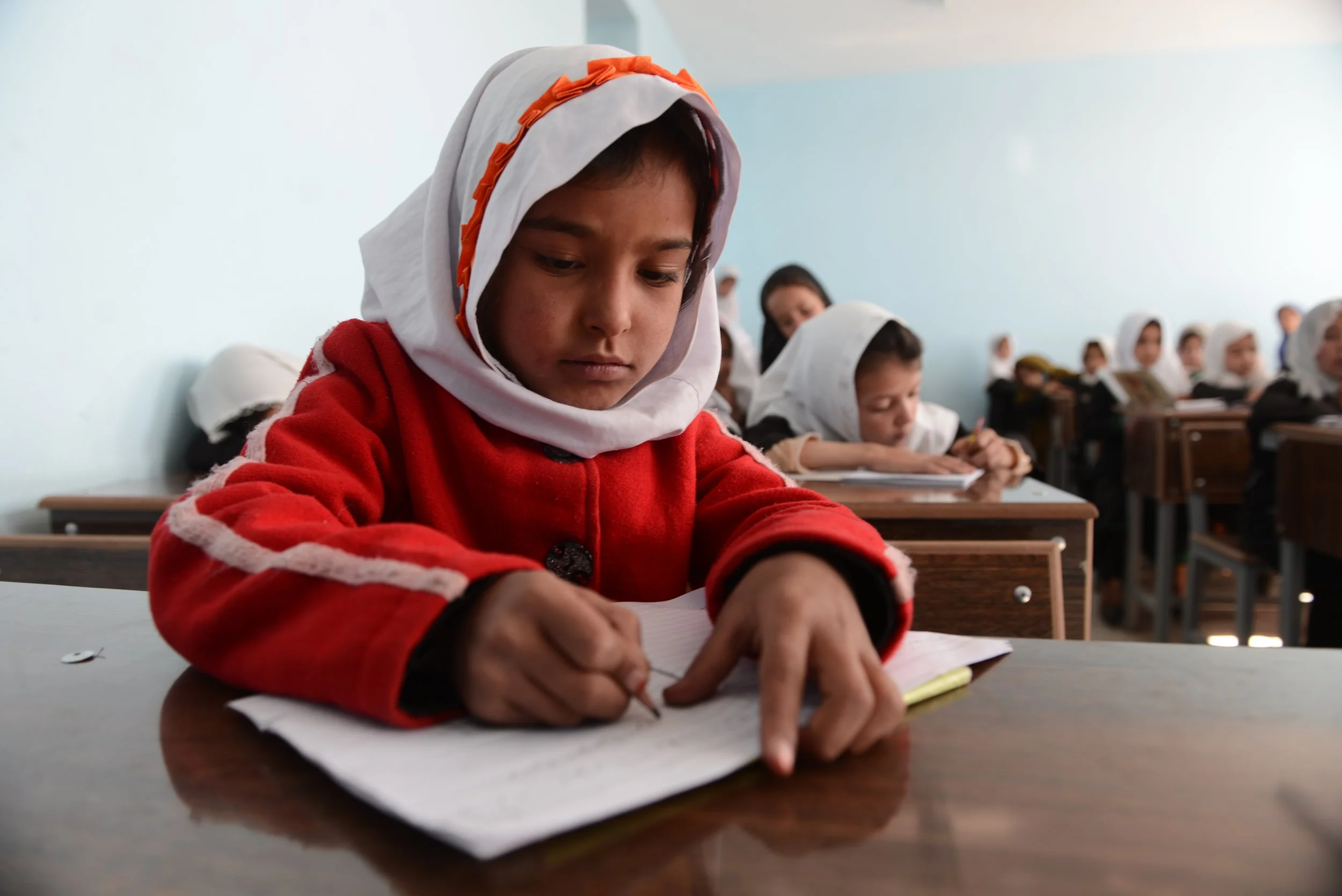
Afghanistan is the only country in the world where girls are systematically barred from attending school past the primary level. Photo credit UNHCR.
By Farzana Elham Kochai* and Joseph Nhan-O’Reilly*
Every October 11, the International Day of the Girl Child invites us to celebrate girls' limitless potential and champion their fundamental right to a safe, educated, and empowered future. But as we mark this day, we must confront a harrowing reality: millions of girls in Afghanistan are growing up under a regime determined to erase them from public life entirely.
Afghanistan remains the only country in the world where girls are systematically barred from attending school past the primary level. For over five years, a generation of adolescent girls has been locked out of secondary classrooms, denied higher education, and stripped of their most basic autonomy. This is not merely a restriction on schooling; it is a calculated, institutionalized strategy of oppression that seeks to stifle the intellect, freedom, and future of an entire population of women.
When you ban a girl from learning, you are not just closing a textbook—you are dismantling her independence, crippling her community’s economic future, and silencing the architects of tomorrow.
Condemnation alone will not alter this trajectory. To stop this erasure, the international community must pivot from rhetorical outrage to two pillars of concrete, forceful action.
First, the world’s governments must formally codify and recognize gender apartheid as a crime under international law. While existing frameworks like crimes against humanity address gender-based persecution, explicitly establishing gender apartheid fills a vital legal void. It provides the international architecture necessary to hold perpetrators fully accountable, delegitimize oppressive de facto authorities, and signal unequivocally that the systematic, institutionalized subjugation of women and girls is an intolerable global crime.
The concept of apartheid on the grounds of gender was first articulated by Afghan women human rights defenders and feminist allies in response to the subjugation of women and girls and systematic attacks on their rights under the Taliban in the 1990s.
Momentum to create the crime of gender apartheid has grown since the Taliban reclaimed control of Afghanistan in 2021.
There is a unique opportunity to incorporate the crime of gender apartheid into international law through the draft crimes against humanity treaty that is currently being negotiated at the UN General Assembly.
We are under no illusion that making gender apartheid a crime will provide a quick fix for the women and girls of Afghanistan.
However, work to make gender apartheid an international crime sends a signal to the Taliban that women’s rights are not forgotten and that gendered crimes will be punished.
It can also give women and girls suffering unimaginably under Taliban rule a sense that they are not forgotten and fuel their hope for justice.
Second, while legal frameworks are being forged, we must invest heavily in practical, ground-level action for education. Because the Taliban has shut formal school doors, the international community must aggressively back alternative learning ecosystems. This means scaling up financial and logistical support for community-based home schools, underground classrooms, digital learning applications, and satellite television educational broadcasts. Every radio lesson funded and every underground textbook shared is an act of defiance against a regime built on ignorance.
This is challenging and dangerous work, but across Afghanistan, communities are doing everything they can to allow their girl children to continue to learn beyond grade 6.
Right now, girls taught in secret have no way to have their learning validated, which adds insult to injury and deprives them of the opportunity to advance their education online and abroad.
On this International Day of the Girl Child, we must refuse to look away. Afghan girls have shown extraordinary courage in the face of insurmountable odds; they are risking everything simply to read, write, and dream. They have done their part by remaining steadfast. Now, it is time for the global community to do its part—by giving them the legal justice they deserve and the education they are rightfully owed.
* Farzana Kochai
Farzana Elham Kochai is an Afghan women's rights activist and former politician living in exile in Norway. She served as a member of the lower house of the National Assembly, the House of the People, from her inauguration in 2019 until the Taliban's takeover of the country in 2021.
*Joseph Nhan-O’Reilly
Joseph Nhan-O’Reilly is the co-founder and executive director of the International Parliamentary Network for Education, where he works with members of parliament worldwide to grow and strengthen political leadership for education.