

IPNEd commits to renew parliamentary support for education global funds
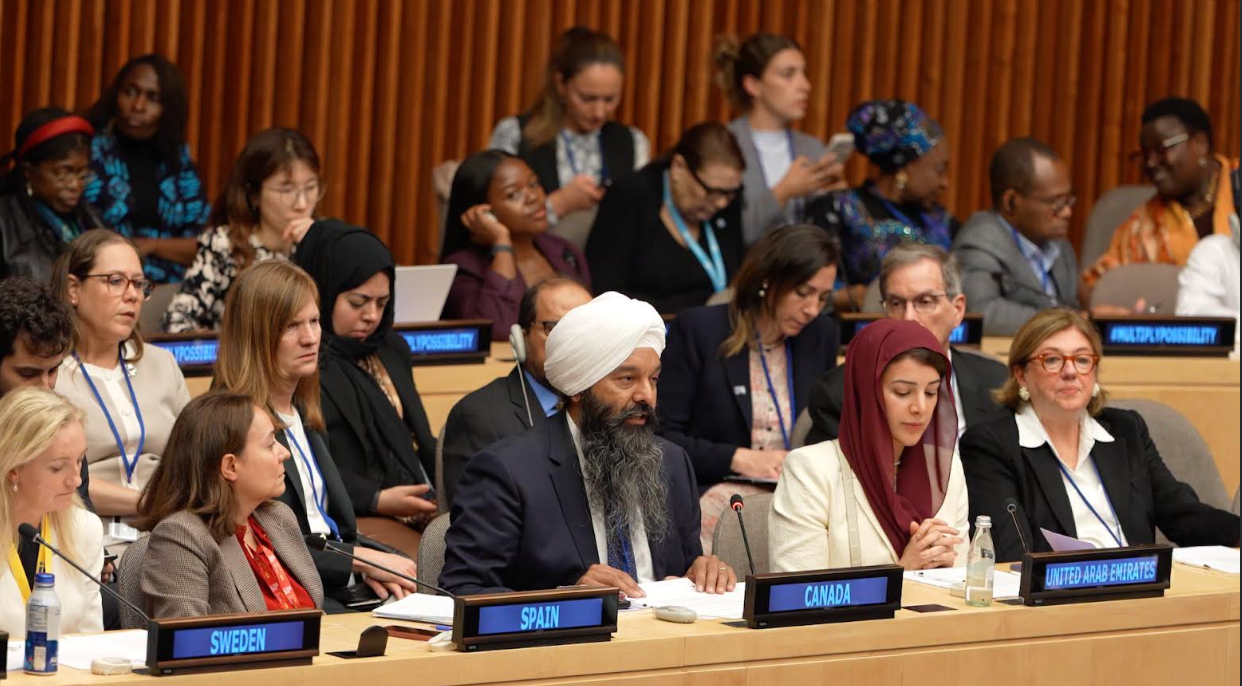
Representatives from donor governments around the world announced pledges to the Global Partnership for Education ahead of their upcoming 2026-2030 operational period. Image credit: GPE / AP
Government donors pledged less than half of the Global Partnership for Education’s $5 billion replenishment target during the UN event.
IPNEd commits to working with parliamentarians to ensure education global funds are fully replenished.
During the United Nations General Assembly at the end of September, the Global Partnership for Education (GPE) hosted a high-level event as part of its campaign to raise $5 billion USD in funding to support 750 million children’s education through to 2030.
During the event, donor governments announced $2.1 billion USD in confirmed and anticipated pledges towards GPE’s upcoming operational period.
“In the face of massive reductions in overseas development assistance by many governments and an increasingly fractured global landscape, multilateral funding for education has never been more important,” said Joseph Nhan-O’Reilly, IPNEd’s Executive Director.
In a briefing published earlier this year, IPNEd argued that supporting the two global funds for education, GPE and Education Cannot Wait (ECW), enables donor governments to maximise the impact of limited resources by strengthening national education systems, protecting learning during crises and helping countries build long-term resilience and self-reliance.
“Whilst I was disappointed that GPE didn’t receive more funding from those that pledged and that some governments didn’t pledge, the pledges that were made show that GPE continues to have support among donors,” said Nhan-O’Reilly.
“Some donor governments like Canada have stayed the course, maintaining their funding and affirmed their support for both GPE and ECW,” said Nhan-O’Reilly.
Speaking at the event, Canada’s Secretary of State for International Development, the Honorable Randeep Sarai MP, said “a child learning to read today could be treating a patient, running a business, or teaching their own students in 15 years. Canada is betting on that child.”
He went on to announce that Canada would maintain its funding for GPE with a $300 million CAD commitment.
Minister Sarai also announced an additional $60 million CAD for the replenishment of ECW.
“Canada’s support for both funds exemplifies what we want to see from other donor governments,” said Nhan-O’Reilly.
Sadly, some long standing supporters of education in general and GPE in particular cut their funding, including the United Kingdom.
Responding to the announcement that the UK had cut its funding to GPE by 77%, IPNEd member and Chair of the UK parliament’s cross-party group on global education, Bambos Charalambous MP, urged the Minister for Development to increase UK funding.
“Britain helped found the Global Partnership for Education and was once its largest donor. I’m deeply saddened and angry that we have cut our support.
“Earlier this year, I saw in Malawi what British support delivers: teachers trained, children learning to read and count who otherwise never would. That progress is now at risk. Every pound cut is a child left without a classroom.
“Ministers promised aid cuts would be offset through multilateral funding like GPE. This pledge breaks that promise. Fewer children learning means slower growth, more instability, wider inequality – that serves no one. I urge the Government to reconsider.”
The commitments made at the launch of GPE’s replenishment campaign provide an important foundation for GPE to begin turning its 2026-2030 strategy into results for children across partner countries.
“Members of parliament in donor countries play a vital role in ensuring their governments support development assistance for education, including by supporting the global funds for education both of which are being replenished this year. We are committed to working with MPs to make the case that aid to education has an important part to play in delivering our promise that every child is in school and learning,” said Nhan-O’Reilly.
