

UK Green MPs back new motion on global education financing
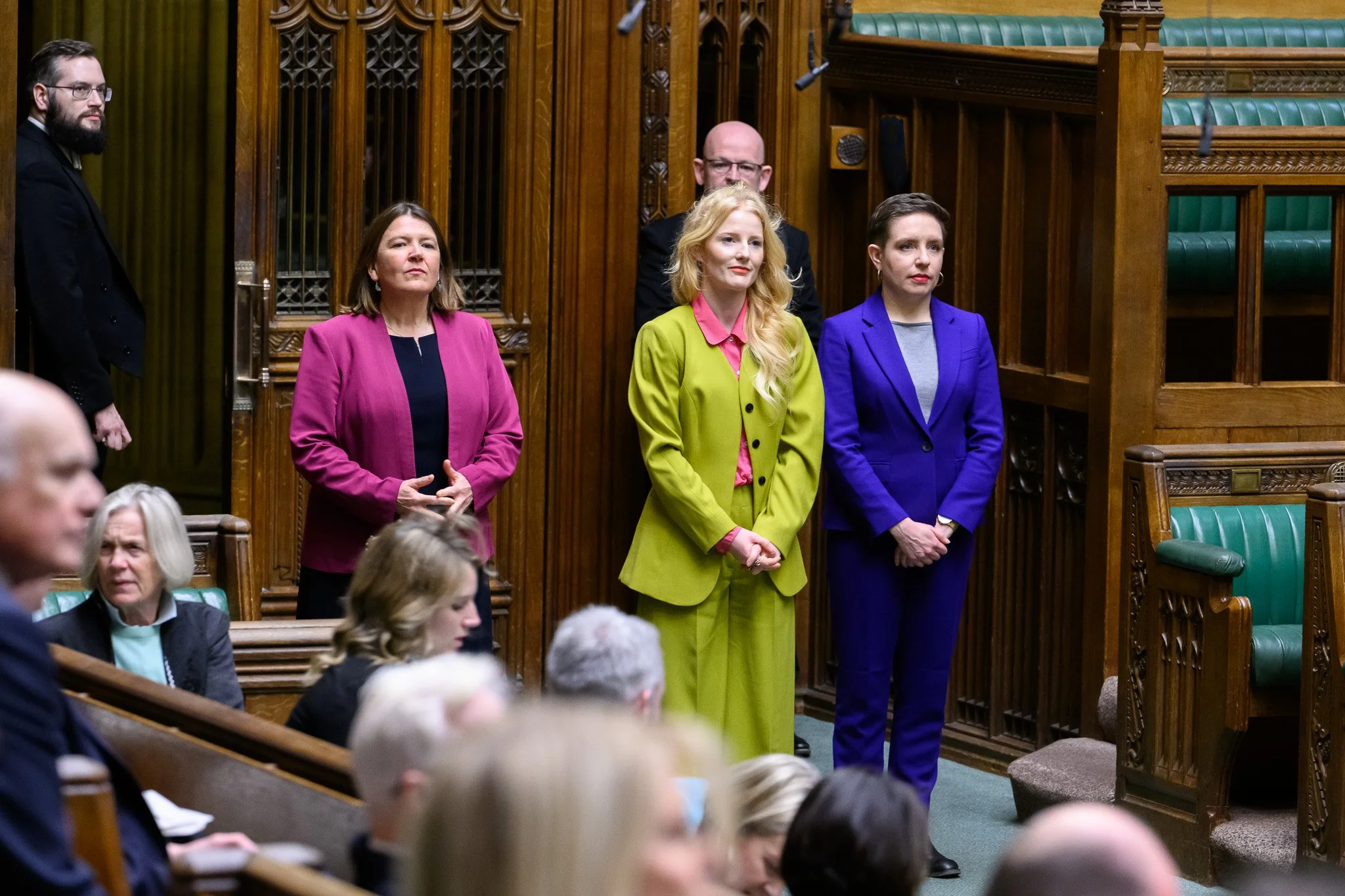
Dr Ellie Chowns MP, Hannah Spencer MP and Carla Denyer MP (all pictured) were joined by Sian Berry MP and Adrian Ramsay MP in calling on the government to maintain funding for the Global Partnership for Education. Photo credit: ©House of Commons
Every Green MP in the UK Parliament has backed a motion on multilateral funding for education, calling on the government to maintain funding for the Global Partnership for Education (GPE).
The motion was tabled ahead of GPE’s Multiply Possibility High Level Event at the UN on September 23 at which the UK is expected to pledge.
On the first day of the new parliamentary session, the Scottish National Party’s Spokesperson for International Development Chris Law MP tabled an Early Day Motion (EDM) on multilateral funding for education.
The motion notes that both the Global Partnership for Education (GPE) and Education Cannot Wait (ECW), the global fund for education in emergencies, are raising funds for their next operational periods.
It welcomes the UK's commitment to maintain existing levels of support for ECW by pledging £80 million for 2027 to 2030, and calls on the Government to do the same for GPE by pledging £430 million for 2026-2030.
Although a significant cut in real terms, maintaining UK funding at this level would enable GPE to train 1.15 million teachers, allow 11.49 million more girls to attend school, and improve the quality of education for over 84.3 million children by 2030.
All Green Party MPs have now backed the motion.
Writing in The Independent, Dr Ellie Chowns MP, the Green Party’s spokesperson for International Development, said that the reduction in aid to education “demonstrates a clear retreat from one of the UK’s long-standing areas of international leadership.”
“Helping children access education is both a moral responsibility and one of the most effective investments in global stability and prosperity.
“Education is not a peripheral development goal; it is infrastructure for stability, an investment in global security, and one of the most effective tools available for reducing inequality, strengthening institutions, and supporting peaceful societies.”
“GPE pools international funding to strengthen the education system and reach children who would otherwise be left behind. It is also one of the clearest examples of effective, multilateral cooperation that the UK has consistently supported and shaped over many years. Weakening that commitment risks undermining crucial educational progress in low-income countries and further damaging Britain’s credibility as a reliable partner in global development.”
“Parliamentary support for the UK’s role in global education is vital, and I welcome this support from the Green Party MPs,” said Joseph Nhan-O’Reilly, IPNEd’s Executive Director.
“The UK is expected to announce its funding for GPE in New York next week. The UK has chosen to reduce bilateral aid, depriving partner countries of at least £600 million in funding over the next three years. That decision makes multilateral investment more important than ever,” he concluded.
