

New compendium on foundational learning practices improving quality education in India
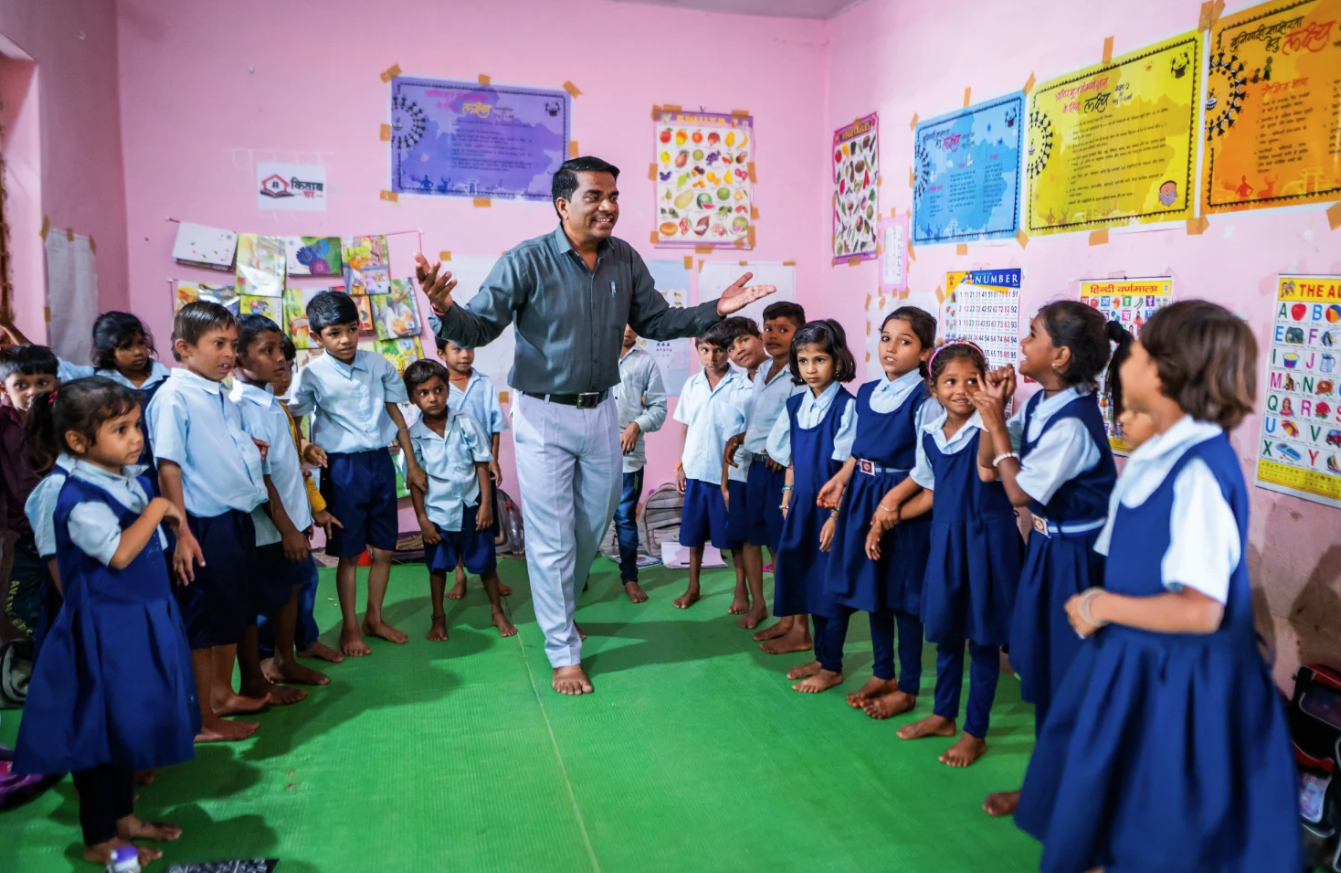
The Indian government's NIPUN Bharat Mission aims to ensure every child learns foundational skills. Image credit: Central Square Foundation
India’s national foundational literacy and numeracy initiative - the NIPUN Bharat Mission, launched in 2021 with the goal of ensuring all children can read and write by the end of grade 2- has just completed its first 5 years, showing remarkable results across critical areas to improve learning outcomes.
The Central Square Foundation (CSF), an India-based education-focused organisation headquartered in Delhi, works with 11 state governments across India to support the implementation of NIPUN Bharat.
The compendium outlines 10 pillars, including teaching and learning materials, technology and monitoring, teacher training, assessments, and community engagement, amongst others.
Political leadership is key to driving and sustaining progress on foundational learning. The National Education Policy 2020 (NEP 2020) was India’s first major overhaul of education policy since the 1980s, and made achieving foundational literacy and numeracy (FLN) an urgent priority.Narendra Modi, India’s Prime Minister, has previously emphasised the importance of Oral Reading Fluency, and raised that foundational literacy and numeracy are essential for a strong base for students at the G20 Education Ministers' Meet in 2023.
This leadership, combined with strong commitment, has driven progress under the national NIPUN Bharat Mission.
The mission has reshaped India’s approach to early learning with clear goals, well-designed teaching and learning materials, investments in teacher training, sustainable architecture for assessments and data-driven decision-making.
Given its scale, NIPUN is considered one of the most complex education transformations underway anywhere in the world, particularly on foundational learning.
The results now speak for themselves. The Parakh Rashtriya Sarvekshan (PRS), conducted by India's National Council of Educational Research and Training, to capture learning outcomes and data at the national level showcases substantial improvements in India's FLN capabilities.
Grade 3 proficiency rose 18 percentage points in language and 23 percentage points in mathematics between 2021 and 2024.
Central to the Mission's success has been its implementation by states in India that have taken ownership of achieving foundational literacy and numeracy, setting goals, and realigning their education structures to work toward the mission. As a result, learning outcomes have improved significantly across states.
Uttar Pradesh (UP), India's most populous state, with a population greater than Brazil's, having almost 75 million children in Grades 1-2 across more than 1.1 million primary schools, offers a compelling example of the changes taking place. The Annual Status of Education Report (ASER) 2024 showcases nearly a 10 per cent increase in reading and subtraction ability in UP from 2022 to 2024. Specifically, the reading ability of grade 3 students increased from 24 to 34.3 per cent, while subtraction accuracy improved from 29 to 40.7 per cent.
This is a brief glimpse into the measures being adopted across India to help children read, write, and do maths proficiently by the end of grade 2 through the NIPUN Bharat Mission.
Best Practices Compendium
The Central Square Foundation has launched a new compendium of best practices outlining the key components of the NIPUN Bharat Mission’s success that yielded significant results.
The compendium brings together field-tested approaches from States and Union Territories to strengthen foundational literacy and numeracy and help every child attain foundational skills by the end of Grade 2.It captures how states are translating the national mission framework into context-specific classroom practices, system reforms and implementation models.
The compendium is organised under 10 pillars, which each represent a core area of mission delivery and impact, from policy intent to improved learning outcomes. These include:
1. Mission salience and communication: The process by which states build salience, communicate goals, and conduct regular review meetings of those involved in the mission. This ensures that all stakeholders, including political, administrative, teachers, and community are committed to the mission.2. Assessment of learning outcomes and targets: The means by which states set targets, align them to learning goals, guide teacher training, and allocate support. States conduct different assessments for language and mathematics to gauge students' competencies, while training teachers to assess them and analyse results.
3. Teaching-learning material and resources for students: The methods used to develop context-specific, activity-based and mother-tongue academic foundational learning resources. It also examines the process and technology through which states develop, procure, distribute, and track this academic material.
4. Resources and support materials for teachers: Examines how teacher guides are aligned to structured pedagogy. This includes teacher handbooks and pedagogical guides, structured lesson and activity plans, model demonstrations, and reference materials that help teachers put FLN approaches into practice in the classroom.
5. Teacher training and continuous professional development: Describes the many structures and technologies used to ensure teachers are trained both ahead of and during service. Cluster meetings, cascades, and other tools were used to ensure that teacher training is aligned to learning outcomes.
6. Academic mentoring and on-site support: The ongoing, school-based academic support extended to teachers by mentors, principally block and cluster resource persons. How feedback is provided and its benefits was examined, including through structured school visits, classroom observation, demonstration teaching, mentor-teacher engagement, and peer learning mechanisms.
7. Monitoring and review: The assessment of the mission's functioning at both the input and output level using technology. This is essential for developing data-led accountability by examining how States track FLN progress and turn evidence into action. Tools used include management information systems and dashboards, performance indicators, structured review at each administrative tier, and data-led identification of areas that require corrective action.
8. Early childhood education (ECE): The critical interventions at the pre-primary stage that establish school readiness as the foundation for early literacy and numeracy - an essential link for continued learning. Such measurements for improvements in ECE examined how different versions of pre-school systems were built, expanded and improved for children.
9. Decentralised planning and ownership: Unpacks the devolution of FLN planning, decision-making, and ownership to the ground and implementation level. The utilisation of district cells, project management units, and a team of professionals to help improve the implementation of the mission are core measures of this devolution.
10. Community engagement and parental participation: The mechanisms for mobilising parents, families, and the wider community in support of children’s foundational learning. Various inauguration festivals, campaigns, drives, and parent-teacher meetings were used to ensure community involvement in students’ foundational learning.India as an exemplar
The documented case studies and best practices make the compendium a timely and useful resource for government officials, parliamentarians and education experts globally to see what worked in India at scale.
The compendium provides a holistic view of the national architecture created at the government level, which Indian states then contextualised and adapted to best meet their children's needs. One of the most important drivers of the NIPUN Bharat Mission's success is sustained political commitment to ensure all children learn to read with meaning and acquire basic numeracy skills in the early grades of primary school.This commitment is expected to continue as the NIPUN Bharat Mission will most likely be renewed for an additional 5 years, strengthening early childhood education and in all probability extending the mission to reach children up to Grade 5.
