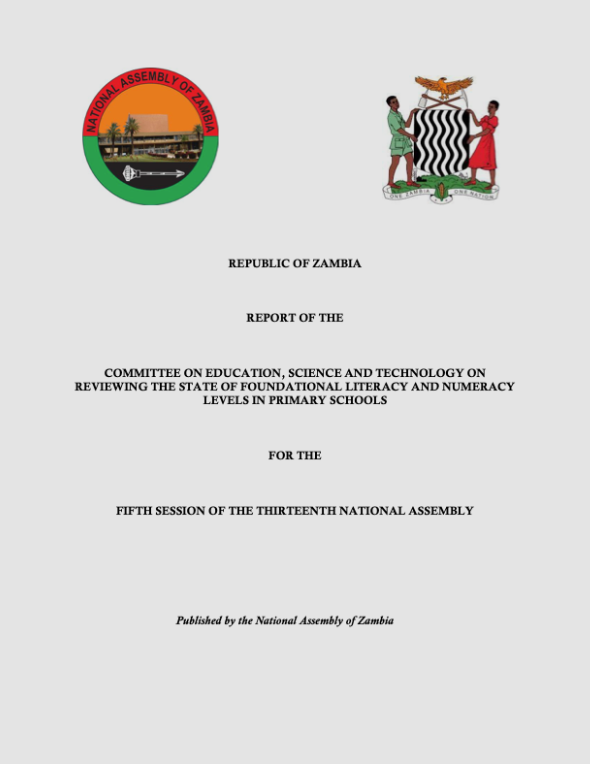
Zambian parliament publishes report of inquiry into foundational learning
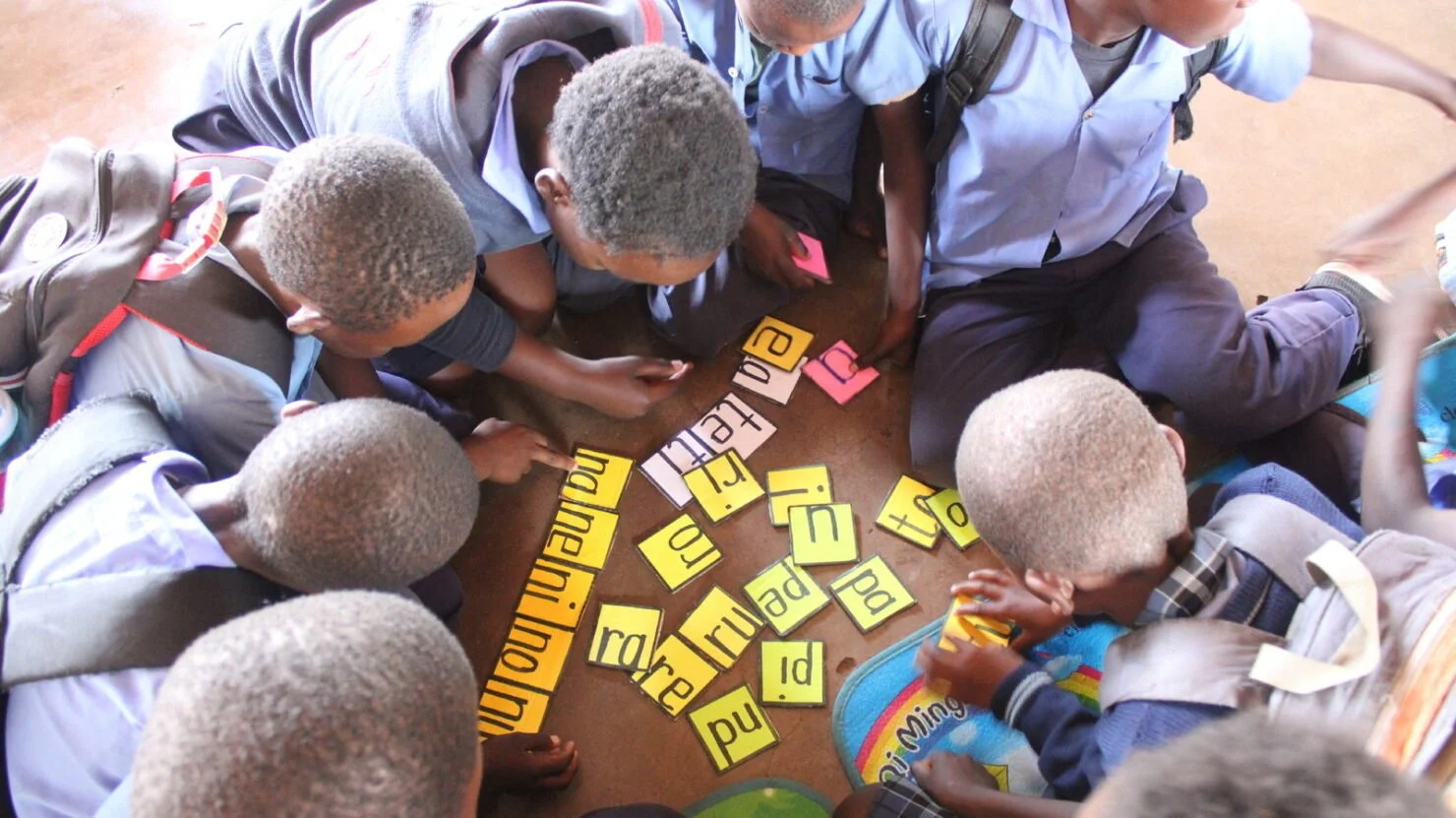
The Zambian parliament has released its report into foundational learning, the first of its kind in Zambia and globally. Photo credit: VVOB Zambia.
A first-of-its-kind parliamentary inquiry into foundational learning has published its report in Zambia.
The Committee’s report calls on the government to accelerate the implementation of evidence-based approaches to improve early grade learning outcomes.
The inquiry demonstrates how parliaments can be engaged to deepen political understanding of the vital importance of foundational learning and help ensure that governments deliver on their commitments to improve early learning outcomes.
The Zambian Parliament’s Committee on Education, Science, and Technology has published its report on the state of foundational literacy and numeracy in primary schools.
The first of its kind in Africa, the Committee’s investigation examined data on learning outcomes; how teachers are trained and supported to teach literacy and numeracy; the quality and availability of teaching and learning materials; and the distribution of resources, including funding, between rural and urban areas.
As in most African countries, early-grade literacy and numeracy outcomes are low in Zambia. A 2024 national study found only 14.4% of Grade 4 pupils reached or exceeded the expected level in mathematics, and only 12.7% did so in reading. The data also point to slow progress over time and large gaps in learning outcomes between groups of learners and across different parts of the country.
The Committee examined this data, held evidence sessions with global and national experts and Ministry officials, and visited schools to see targeted programmes being delivered.
The inquiry identified encouraging progress, including the success of Zambia’s Catch-Up Programme.
Catch-Up supports teachers to use the ‘Teaching at the Right Level’ approach, to provide students with targeted, level-appropriate support focused on children who are not meeting the expected standards for their age.
The Committee’s investigation also highlights opportunities to use structured pedagogy, improve school leadership, and leverage low-cost tools and partnerships to drive up foundational learning outcomes.
The report calls for stronger pre-service and in-service teacher training, more regular school-based professional support, better and more equitable distribution of teachers and materials, and deeper engagement with parents, civil society and development partners.
The Government is now required to provide a formal response to the Committee’s report.
“We have made some far–reaching recommendations on this critically important issue, and the Committee is confident that the Executive will act on our findings, and we look forward to supporting them when they do,” said Hon. Harry Kamboni MP, Chair of the Committee.
“The Zambian Parliament’s Education Committee has provided a compelling demonstration of how to widen and deepen political understanding of and commitment to one of the most important issues in education. I hope that every national parliament across the continent does the same thing and initiates an inquiry into the state of foundational learning,” said Joseph Nhan-O’Reilly, IPNEd’s Executive Director.
“The findings and recommendations of inquiries like this generate cross-party agreement, which provides the basis for long-term action on and investment in driving up learning outcomes. I want to thank the National Assembly of Zambia for their groundbreaking work and look forward to seeing how it accelerates action in Zambia and inspires parliaments across the continent,” concluded Mr. Nhan-O’Reilly.