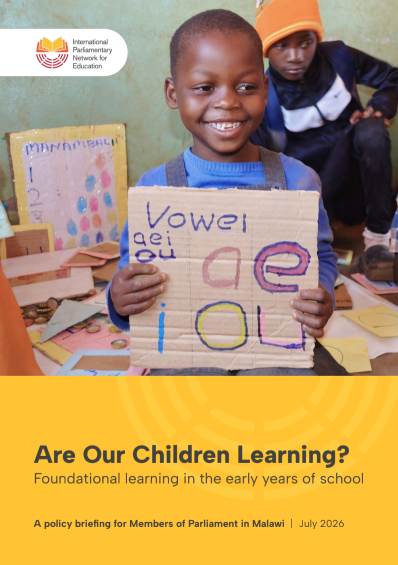
Malawi parliament commits to national inquiry into foundational learning
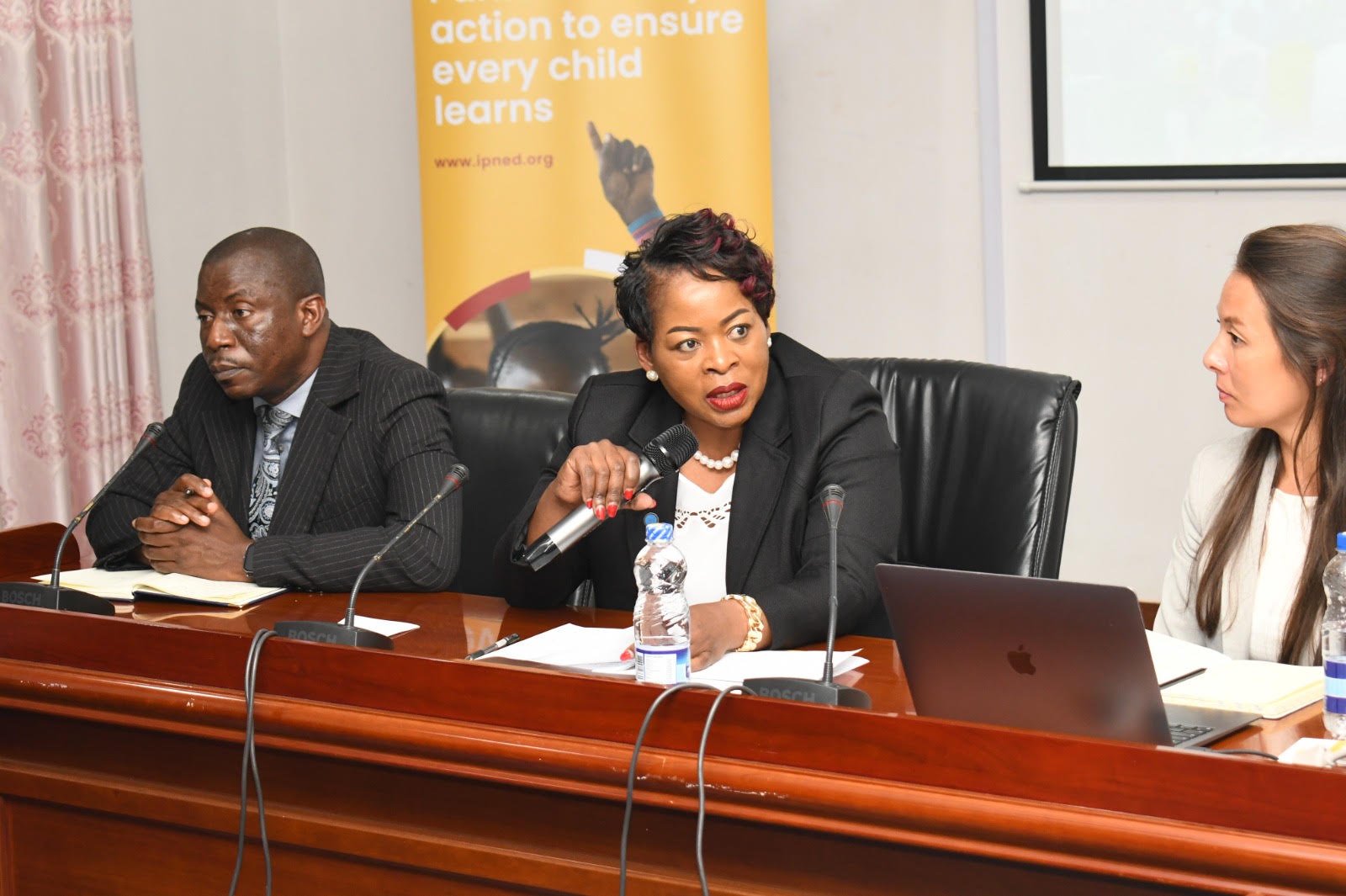
Hon. Mutani Tambala MP, Chair of the Education Committee in the Parliament of Malawi spekaing at the launch.
On the eve of the third Africa Foundational Learning Exchange in Lilongwe, the Parliament of Malawi committed to conducting an inquiry into the state of foundational learning in Malawi.
The commitment was made on Monday, July 13, during the launch of a policy brief titled ‘Are Our Children Learning?’ which was held in the national parliament and attended by more than thirty MPs.
Chairperson of the Parliamentary Committee on Education, Science and Technology, Hon. Mutani Tambala, who officially launched the policy brief, said Parliament would spearhead the inquiry to establish why many children are failing to acquire basic literacy and numeracy skills despite increased access to education.
“Access to school alone is not ensuring that children actually learn,” Mrs. Tambala said. “This inquiry will help us understand the gaps and hold the government accountable for delivering learning for every child.”
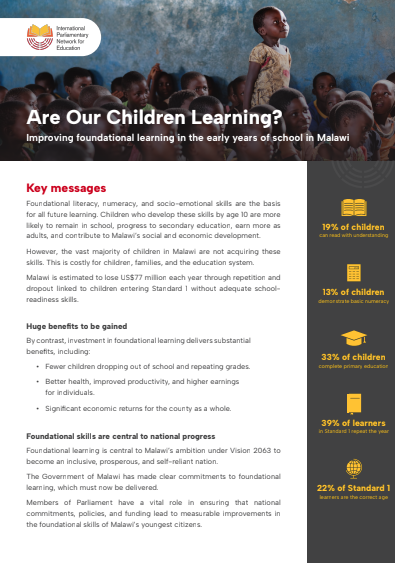
The policy brief, developed by civil society organisations and development partners, paints a worrying picture of learning outcomes in Malawi’s primary schools. While school enrolment has improved significantly over the years, the report shows that only 19 percent of children can read with understanding, 13 percent possess basic numeracy skills, and only 33 percent complete primary education.
The briefing also reveals high repetition and age-for-grade challenges, with 39 percent of Standard One learners repeating the grade and only 22 percent being of the appropriate age for their class.
Speaking during the launch, Senior Policy and Advocacy Adviser at the International Parliamentary Network for Education, Beth Gum, said Malawi’s success in expanding access to education has not been matched by improvements in learning.
“We have made important progress in getting children into classrooms, but that progress has not translated into children acquiring the foundational skills they need to succeed,” she said.
The policy brief warns that persistently low learning in the early grades of primary school carries significant long-term economic and social consequences. It notes that children who acquire foundational reading, writing, and numeracy skills at the appropriate age are likely to earn 4 to 20 per cent more during adulthood, with the greatest benefits accruing to women and, ultimately, their children.
Executive Director of the Civil Society Education Coalition (CSEC), Benedicto Kondowe, described the engagement with Members of Parliament as productive, saying lawmakers had demonstrated commitment to addressing the crisis.
“Every child deserves to learn. Being in a classroom is not enough,” Kondowe said. “Access has improved, but learning outcomes remain a challenge. We need a policy shift that focuses on whether children are actually learning.”
He said the planned parliamentary inquiry would provide legislators with the evidence required to strengthen oversight and hold the government accountable.
“This inquiry will give parliament the evidence it needs to ensure government delivers for our children,” he said.
“The inquiry will help deepen parliamentary understanding of the challenge of foundational learning, why it is a critical issue and what can be done to drive up learning outcomes,” said Joseph Nhan-O’Reilly, the Executive Director of IPNEd.
“The aim is for parliament to identify proven reforms that can be implemented and that will lead to more children learning, including ensuring teachers have up-to-date skills and capacity to teach reading and mathematics using proven methods, providing all teachers with guides and all students with workbooks,” concluded Mr. Nhan-O’Reilly.
Members of Parliament serving on the Education, Budget, and Social Welfare committees were at the launch, signalling broad recognition that addressing the issues in foundational learning will require coordinated action across sectors.
The briefing was co-produced with a coalition of local organisations including ActionAid Malawi, the Civil Society Education Coalition (CSEC), FAWEMA, FEDOMA, VVOB, UNICEF Malawi, TaRL Africa, Rays of Hope, and the Local Education Group (LEG), facilitated by the International Parliamentary Network for Education.