

Maths must count: What Malawi’s numeracy reforms teach us
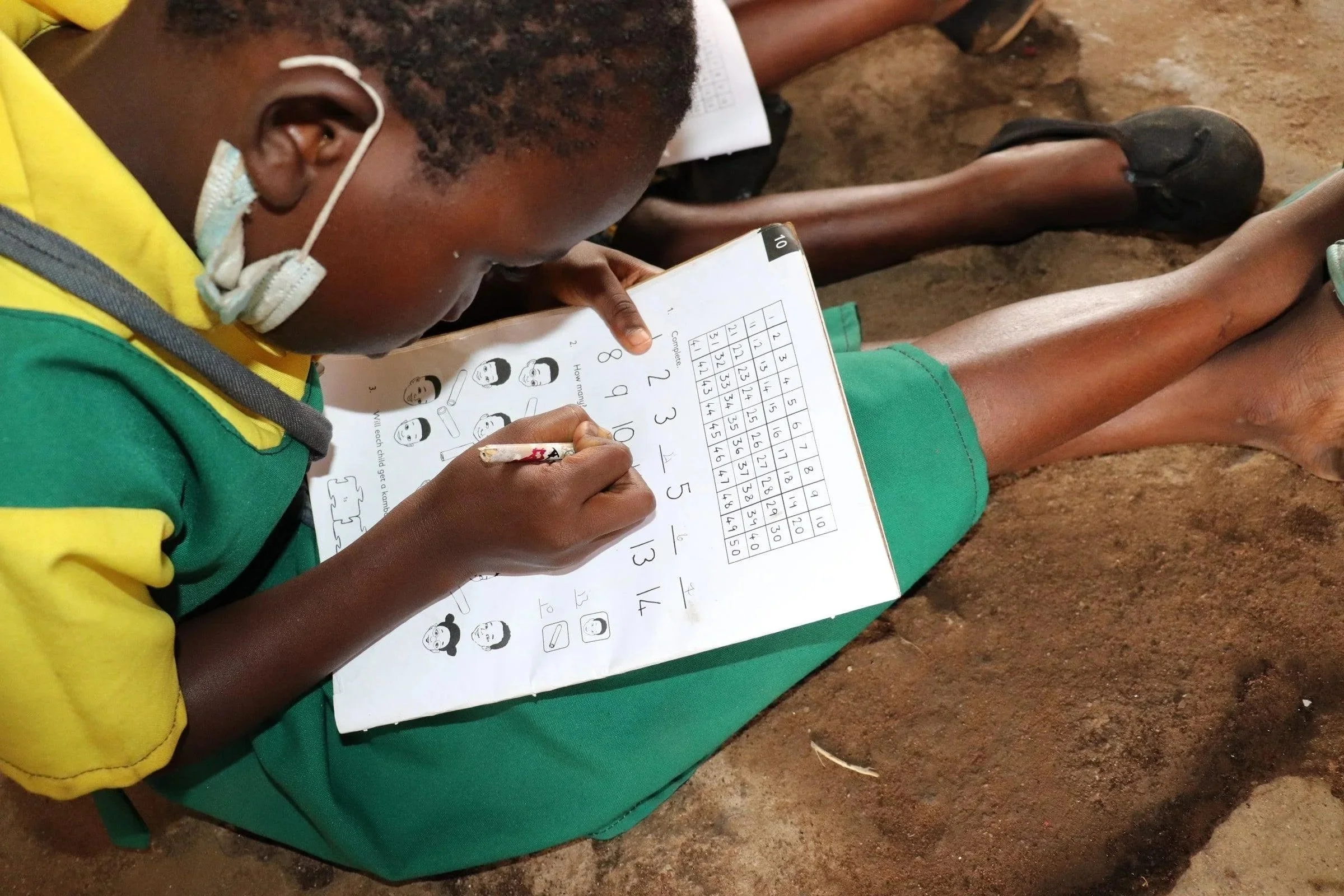
Malawi has made progress on numeracy through the National Mathematics Curriculum Reform Programme.
Beth Gum, Senior Policy & Advocacy Advisor at the International Parliamentary Network for Education, and Harry Metcalfe, Education & Partnerships Manager at White Rose Education, argue for the importance of numeracy reform.
They highlight the effectiveness of the National Mathematics Curriculum Reform Programme in Malawi.
Numeracy must be treated as a vital part of foundational learning, rather than being secondary to literacy.
Foundational literacy and numeracy have become increasingly politically salient across Africa and globally in the last few years. More political leaders are prioritising early-grade learning, and more development partners are picking up the issue, supporting governments to scale evidence-based reforms and implement what works.
But amidst this commitment to learning, one area remains significantly less prioritised than the other: foundational numeracy. There is less programming, less data, less political commitment, and less evidence on primary-grade mathematics than there is on literacy.
And yet, learning the basics in maths is key to staying in school and progressing in other disciplines, earning more when entering the workforce, and participating fully in society—all of which contribute to individual growth, a nation’s development, and strengthening human capital.
Being numerate helps build logical reasoning, problem-solving, and cognitive skills needed for STEM careers and a modern, innovative workforce.
If Africa is to leverage its booming youth population, focusing on early mathematics might be one of the most crucial pathways towards success. Recent evidence shows that early numeracy is among the most significant predictors of later academic achievement—more so than early reading skills.
Prioritising foundational numeracy is therefore money well spent and means an investment into the early grades which has long-term gains for individuals, nations, and the continent.
Whilst many countries are grappling with early literacy reforms, there have been promising developments in Malawi, where a nationwide numeracy reform—known as the National Mathematics Curriculum Reform Programme (NMCRP)—has been scaled and implemented to improve mathematics in the first two years of primary school. And it’s working.
Mathematics in Malawi: A case in point
The NMCRP (previously known as the National Numeracy Programme or NNP) is a nationwide reform designed to strengthen foundational numeracy through a structured pedagogy approach.
This approach emphasises carefully-sequenced lessons and consistent instructional practices to support effective learning. The programme supports teachers with clear lesson guidance, high-quality teaching materials, and professional development, and has been rolled out to 5,900 schools across Malawi.
From the outset, the government had a clear vision on how to improve foundational numeracy, thus ensuring strong national ownership and long-term sustainability of the reforms. As technical partners, White Rose Education, alongside Mott McDonald and Cambridge Education, contributed expertise in curriculum design and mathematics pedagogy.
This included supporting the development of a mathematics curriculum, relevant to the Malawian context and aligned to the Global Proficiency Framework, alongside classroom resources grounded in research on how children learn mathematics most effectively. It is designed to support teachers to deliver more effective lessons that strengthen students’ confidence and deepen their understanding.
Training was conducted in partnership with Malawian master trainers, who cascaded the training to teachers across the country and provided structured professional development each term, thus supporting national scale and sustainability. Feedback collected by district and ministry officials in 2023 reported that 99% of teachers felt more confident using the materials and new pedagogical approach—a huge win.
Not only that, but a randomised controlled trial conducted during the programme’s implementation in 2024-2025 found that students in treatment schools improved significantly. It showed that the average child learnt about an extra half-year of maths compared with a typical school year in Malawi. This is a remarkable achievement, showing meaningful progress toward narrowing the learning gap between Malawian students and their regional peers.
Advancing foundational numeracy in Africa
Many lessons can be drawn from the case of Malawi for the region, and for low- and middle-income countries globally, which are faced with the challenge of ensuring children are learning basic mathematics at grade level.
Political prioritisation of the issue is an important first step. When political leaders acknowledge challenges in learning, address barriers, and provide solutions, learning outcomes can and will improve. The Malawian government took the issue of low levels of numeracy seriously and made it a national, locally-led priority, which has lasted beyond election cycles—demonstrating a clear commitment to improving learning outcomes, distinct from the donor-driven agenda.
Second, incorporating evidence-based approaches to improving classroom instruction is key. Structured pedagogy is considered by the World Bank as one of the ‘Smart Buys’ in foundational learning, because it is a low-cost intervention proven to be highly effective.
By creating well-sequenced lesson plans with clear guidance for teachers and providing high-quality teaching and learning materials in Malawi, numeracy levels were improved significantly. Malawi’s numeracy programme is now considered one of the most effective numeracy programmes across the entire continent.
This is not a standalone finding. The UNESCO GEM Report’s Spotlight series of reports also recommend that, to improve learning outcomes, all children and teachers need access to teaching and learning materials that are research-based and aligned to the curriculum.
Third, teachers need to be trained to teach effectively. Providing pre-service and in-service teacher training to improve the quality of classroom instruction is critically important. Teachers need to be using classroom time efficiently, and training needs to be cost-effective and locally owned. In Malawi, teacher training was built into numeracy reforms from the start, locally contextualised and delivered nationwide, helping ensure that stronger classroom practice was embedded across the system.
Fourth and lastly, assessments were used to track progress and understand the programme’s impact. Without timely evidence, reforms operate in the dark and it becomes far harder to identify what is working, where gaps remain, and to find solutions. Strong monitoring and evaluation are therefore essential not only for measuring success, but for sustaining political commitment and guiding continuous improvement.
Malawi shows that foundational numeracy does not need to remain the neglected sibling of literacy reform.
In an increasingly crowded learning agenda, maths deserves far greater political attention, funding, and evidence generation. If governments and partners are serious about improving learning and building human capital, numeracy must move from the margins to the centre.
Put simply, in a noisy literacy landscape, maths must count too.
By Beth Gum, Senior Policy & Advocacy Advisor at the International Parliamentary Network for Education, and Harry Metcalfe, Education & Partnerships Manager at White Rose Education.
