

MPs call for reversal of UK aid cuts which fall disproportionately on education
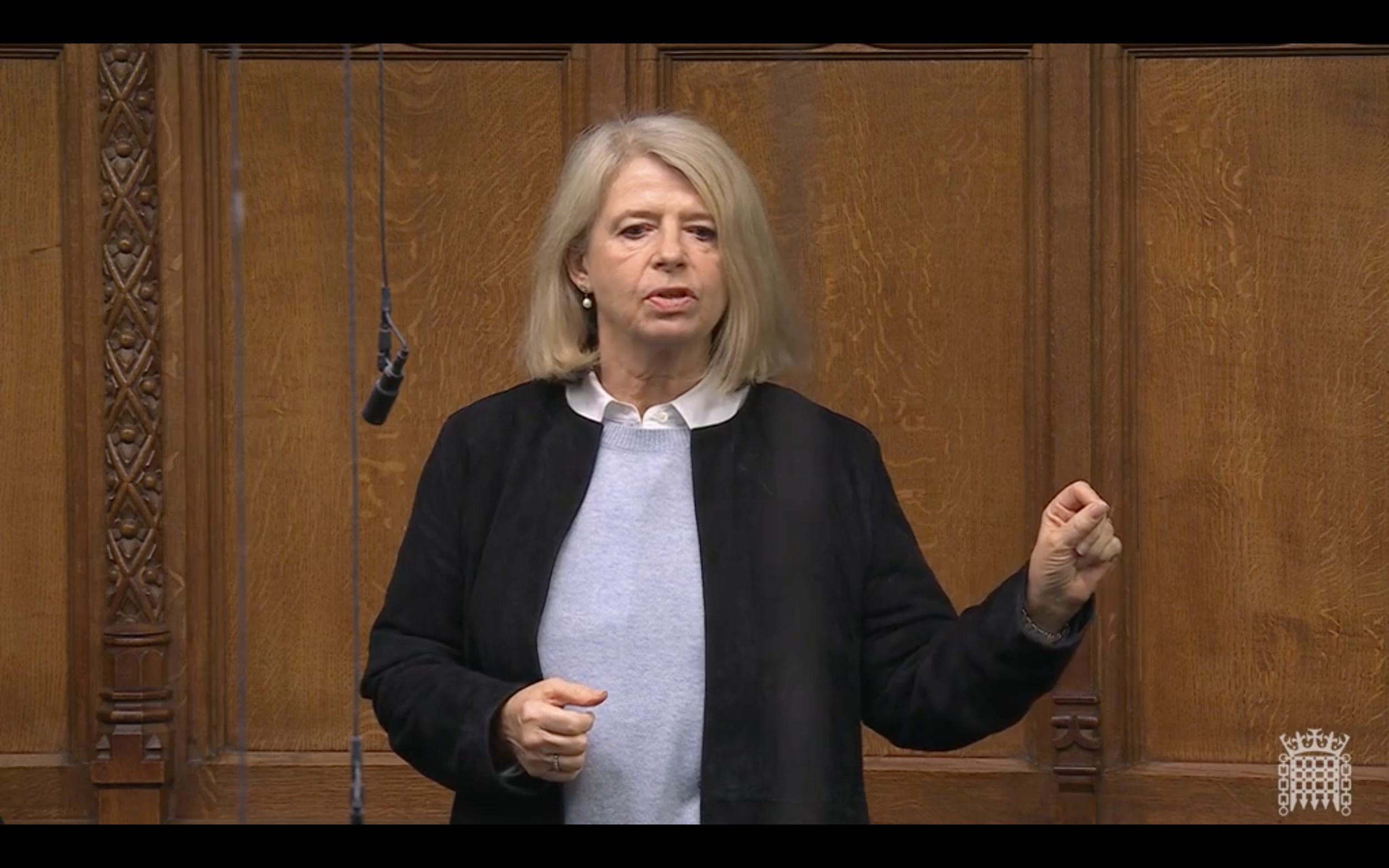
Dame Harriet Baldwin MP, the co-founding chair of IPNEd, was one of many MPs to speak out against the latest round of UK aid cuts.
The UK Foreign Secretary has set out how UK aid will be allocated after record reductions.
IPNEd members spoke out against the cuts, calling them a false choice and urging the government to reverse the decision and protect education.
In a statement to the United Kingdom Parliament on the 19th of March, Foreign Secretary Yvette Cooper MP set out the British government’s revised approach to international development, including where a 40% reduction to Britain’s international development budget will fall.
The figures confirm that by 2027-28, aid spending on overseas programmes is set to reach its lowest point since records began in 1970, at just 0.24% of Gross National Income (GNI), after deducting the roughly £2 billion annual cost of housing asylum seekers in the UK.
Analysis also shows that UK aid cuts are set to be steeper than those of any other G7 country, going even further and faster than those of the United States.
The UK‘s bilateral aid to African countries will be reduced by almost £900m by 2028-29—a 56% cut—as part of more than £6 billion in cuts which are funding an increase in defence spending. UK bilateral support for education of up to £300m per year will be almost completely lost, ending critical support for education in some of the world’s poorest countries.
Members of the International Parliamentary Network for Education in the UK Parliament have spoken out against the cuts.
Speaking in the House of Commons, the Chair of the International Development Committee, IPNEd member Sarah Champion MP, said: “What the Foreign Secretary has said confirms that there will be no winners from unrelenting UK aid cuts, just different degrees of losers. The cuts mean that the overall picture is desperately bleak for some of the world’s most vulnerable people.”
“I fear that the Government’s decisions have been made on a false dichotomy. We’ve had defence pitched against international development, and if you ask any military person, they will tell you the best line of prevention and first defence is our development money. Because it keeps people safe and secure in their homes, it keeps them prosperous, it holds governments to account and I am very fearful in the world that we find ourselves that taking that first line of defence away is going to have massive consequences.”
“These cuts do not aid our defence, they make the whole world more vulnerable,” said Ms Champion MP.
Bambos Charalambous MP, Chair of the All-Party Parliamentary Group on Global Education and an IPNEd member, called on the government to continue to support education.
In an official statement after the Foreign Secretary’s announcement, he said: “Millions of children face barriers to education outside of conflict zones as well. 272 million children are out of school, and 7 in 10 children in low-income countries cannot read a simple text with understanding by age 10. The cuts to the aid budget will mean fewer children have that opportunity to go to school and learn how to read and count, especially in Africa, where UK support will be slashed by almost £900m by 2028-29.”
Green Party Spokesperson for Foreign Affairs and IPNEd member Dr Ellie Chowns MP also spoke in parliament, saying: “The UK’s defence does not exist in isolation from global security. You cannot make Britain safer by making the rest of the world more unstable.”
“I spent years working in international development. I lived in an active conflict zone. I saw firsthand how extreme poverty, political instability, and lack of opportunity create the conditions for violence and war. Children pay the price for that. Entire communities and regions pay the price. And so does the UK, in the end.”
“If the Government is serious about keeping Britain safe, they need to think about security beyond bombs and battalions.”
Liberal Democrat International Development Spokesperson and IPNEd member Monica Harding MP branded the cuts “appalling”, adding: “This is a shameful moment, not only a moral catastrophe, but strategically illiterate. When the world is on fire, we need more work on prevention of conflict, not less.”
The Scottish National Party’s Spokesperson for International Development and IPNEd member Chris Law MP said: “The UK was once regarded as a world leader in international development, yet today UK aid cuts are the steepest, deepest, and most brutal of any G7 country. We know that they will deny children education and hit those who live in extreme poverty hardest.”
Dame Harriet Baldwin MP, the founding co-chair of IPNEd, reminded the Foreign Secretary that the commitment to spend 0.7% of GNI on development assistance was still law, and called for a named vote on the changes she was announcing.
The Executive Director of the International Parliamentary Network for Education, Joseph Nhan-O’Reilly, welcomed cross-party opposition to the reductions, saying: “At a time of growing global instability and deepening inequality, education—which is universally understood as the foundation for peace, security, and prosperity—is more important than ever.”
“We will be working with our member parliamentarians to push for a reversal of these cuts and for stronger political commitments and practical action by the UK to make the world a safer, more prosperous place through improving access to education.”
