

Systematic injustice requires systematic action: The case of Afghanistan
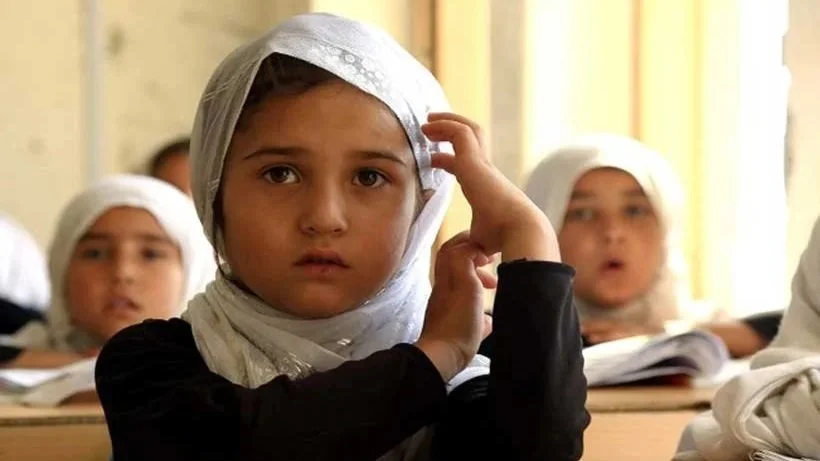
Photo credit: Rumi Consultancy/World Bank via Modern Diplomacy
No regime in modern history has worked so systematically to erase women from public life as the Taliban has in Afghanistan. As of today, 258 edicts, directives, and orders have been issued restricting human rights in Afghanistan. Of these, 164 specifically target women and girls’ rights to education, employment, movement, public participation, and expression.
This week, the school year begins in Afghanistan. However once again, the country’s adolescent girls and young women will be denied the opportunity to enrol and attend school.
Today, March 24, marks 1,649 days since the Taliban banned secondary education for girls, and 1,189 days since public universities were instructed to expel female students and lecturers.
It also marks 477 days since the Taliban prohibited women from studying midwifery, nursing, and other medical disciplines, a ban issued on December 2, 2024, which remains in force nationwide.
In February of this year, the Taliban publicly flogged 15 women, bringing the total number of women subjected to public flogging since the practice resumed in November 2022to 363.
Human rights organisations increasingly warn that these policies are crimes against humanity.
There is also a growing consensus that the institutionalised discrimination designed to permanently exclude women from public life and systematically deprive them of their fundamental rights, implemented by the Taliban, is a form of apartheid based not on race, but on gender.
Yet even under such systematic repression, education in Afghanistan has not been extinguished. Alongside other forms of resistance, such as strikes, demonstrations, and acts of civic defiance, education has not disappeared. It has simply moved underground, online, and into communities.
Across the country, families, teachers, and civil society organisations continue to provide the country’s adolescent girls with alternative ways to learn. This reveals an essential truth, that whilst the Taliban can ban schooling, they cannot extinguish the desire to learn.
The women and girls in Afghanistan, doing everything they can, against great odds, to continue their education, are the latest in a long history of female resistance and resilience that stretches across generations. It includes women and girls who’ve endured foreign invasions, the Soviet occupation, years of civil war, the rise of the first Taliban regime, and the turmoil that has followed.
Just as we need to recognise the history of Afghan women’s resilience, we also need to understand the implications of the current crisis for the region, in which we are witnessing a convergence of escalating tensions and ideological hardening.
To begin, recent cross-border attacks by Pakistan have exacerbated Afghanistan’s fragility, adding another layer of insecurity to an already challenging environment.
Meanwhile the resurgence of Iran–Israel–United States hostilities reflects an increasingly volatile security environment in the Middle East; the narrowing of civic space in countries such as Turkey; the rise of nationalist politics in states such as India has seen an intensification of conflicts over minority rights and civic inclusion; meanwhile the persistence of militarized conflict, from the wars in Gaza and Ukraine to prolonged instability in Yemen and Syria, has normalized the prioritization of security narratives over civil liberties.
At the same time, the continued spread of ideological extremism, from Taliban rule in Afghanistan to militant networks operating across the Sahel and parts of South Asia, demonstrates how radical governance models can gain traction in fragile political environments.
In such contexts, women’s rights are frequently the first to be curtailed, making women’s status a revealing indicator of future policies and governance.
As a result the systematic exclusion of women from education and public life in that has occurred in Afghanistan should be understood as a warning for good governance, stability, and global security.
Removing half of a society from education and economic participation undermines human capital, accelerates structural poverty, and expands informal and illicit economies, conditions historically associated with fragility and the growth of violent networks.
The consolidation of power through gender exclusion sends a powerful signal to other ideological movements that if such a governance model appears permissible, it risks becoming a replicable template for extremist actors seeking social control elsewhere.
Preventing the normalisation of such a model is therefore not merely a moral imperative—it is a core strategic interest for global stability.
Afghanistan now stands as the only country in the world where women and girls are officially barred from education beyond primary school, and allowing such a reality to persist risks normalising a model of exclusion that undermines international norms, weakens long-term economic stability, and threatens the very foundations of an inclusive, rights-respecting and rules-based global order.
When injustice becomes systematic, the response must also be systematic. Words must now be matched with tools, targeted sanctions, travel bans, financial restrictions, and legal accountability.
Moreover, international support remains essential to sustaining education for Afghan girls and preventing the irreversible erosion of Afghanistan’s human capital. At a recent event organised by the International Parliamentary Network for Education, it issued a call to action to protect human rights, including the right to education, in Afghanistan, emphasising that community schools, alternative learning pathways, and digital education are not acts of charity; they are strategic investments in Afghanistan and the region’s future.
International cooperation has already shown its power: it has denied the Taliban broad diplomatic recognition, restricted access to Afghanistan’s sovereign reserves, and blocked their seat at the United Nations. Yet containment is not enough. The ban on girls’ education is therefore not merely a domestic policy failure; it is a global test of conscience and political will.
This Women’s History Month is a crucial reminder that Afghan girls stand on the shoulders of those who believed in their right to learn, and one day they will become the shoulders upon which a more just and educated Afghanistan will rise. The question history will ask is not only what the Taliban did, but who had the courage to stand with these girls, who chose action over silence, and who refused to let an entire generation of girls disappear from Afghanistan’s classrooms.
Naheed Farid is a former Member of the Parliament of Afghanistan, where she chaired the Women’s Affairs Commission. She currently serves as Executive Director of HerFuture Afghanistan, an initiative providing Afghan girls with access to technology and IT education. She is a member of the the International Parliamentary Network for Education and sits on the Advisory Board of AfghanEvac.
This article was originally published in Modern Diplomacy on the 24th of March, 2026.
