

Over 10 million children reached in 33 crisis-affected countries - ECW releases annual report
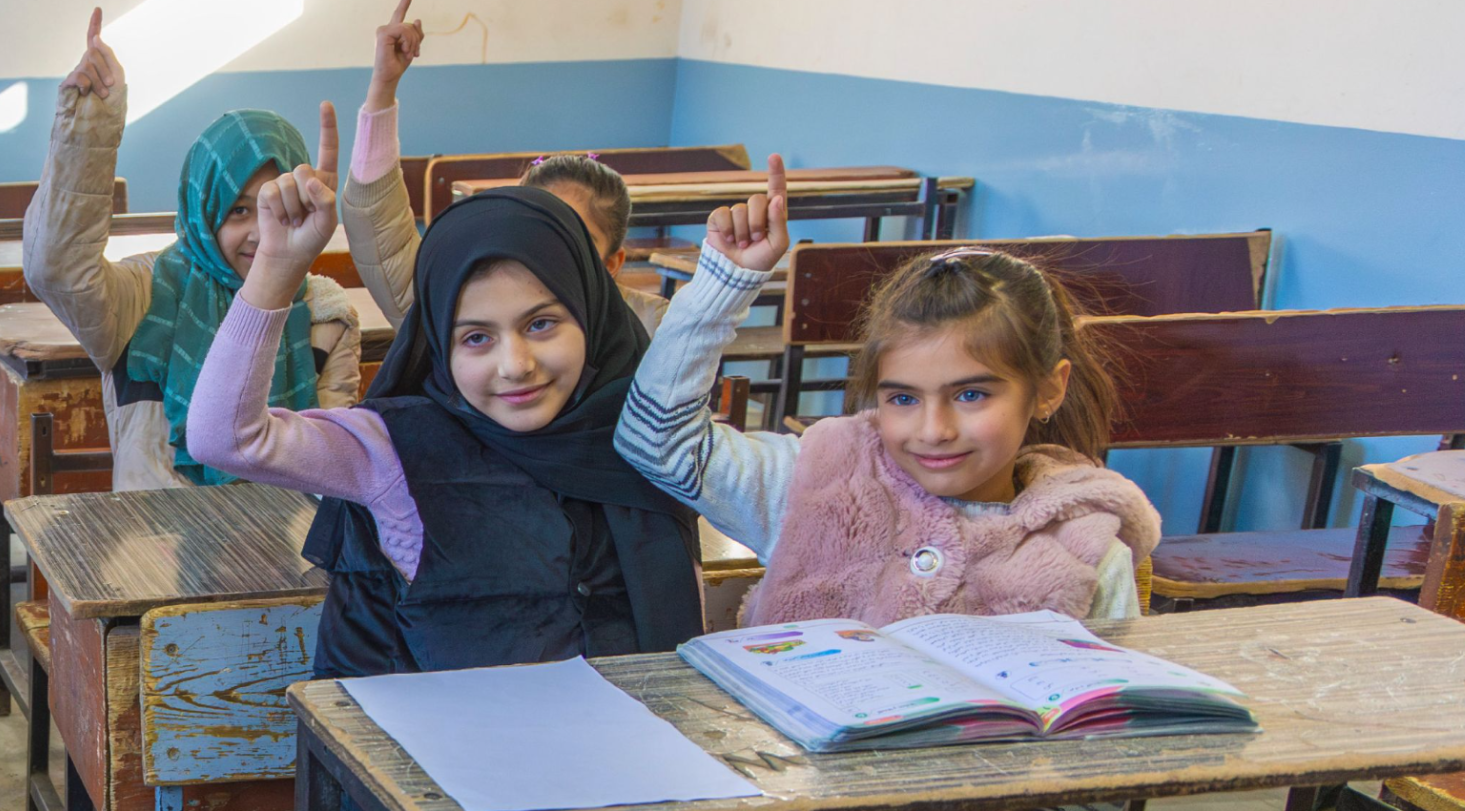
Education Cannot Wait’s support of millions of crisis-affected children can only continue with meaningful political commitment and action. Image credit: ECW
Education Cannot Wait (ECW) has published its 2025 Annual Results Report, titled ‘Defending Hope, Delivering Education’, outlining the significant results realised by funding during the third year of its 2023-2026 Strategic Plan.
Ahead of ECW’s replenishment for its next operational period, the multilateral fund continues to deliver results for children living in countries facing the world’s most severe crises, despite aid cuts and a resultant drop in education financing.
Since the beginning of its 2023-2026 operational period, ECW has supported programmes that have reached 10.4 million children in 33 of the world’s most crisis-affected countries - half of them girls.
Expanding access to quality education, improving learning outcomes and reaching the world’s most vulnerable children are core pillars of ECW’s strategic plan. Through targeted funding, the report outlines that ECW-supported programmes have delivered:
Improved education enrolment and participation, with 97% of programmes increasing children’s participation in education.
Improved transition rates, with 93% of reported transition rates from non-formal to formal education above 60%.
Improved literacy and numeracy, with 96% of Multi-Year Resilience Programmes reporting evidence showing improvements in literacy and/or numeracy.
Improved retention and completion rates, with 82% of programmes reporting retention, progression or completion rates above 75%.
These results are particularly significant given the environments in which ECW operates. Four out of five children reached live in the most severe crisis contexts, at high risk of conflict, displacement or climate-related shocks, and two in five are forcibly displaced.
The report therefore demonstrates not only that education can be protected during emergencies, but that sustained investment can enable children to remain in education and continue learning while building stronger, more resilient systems around them.
As conflict, forced displacement and climate-related emergencies place growing pressure on education systems, protecting and building on this progress will require sustained political and financial commitment.
Beyond its direct impact on children’s access and learning, the report shows how ECW’s investments are helping to strengthen education systems’ ability to respond to crises.
Coordination between humanitarian, development and peace actors has improved significantly across ECW’s multi-year programmes, while 31% of First Emergency Response and Multi-Year Resilience Programme budgets are now directed to local and national actors, exceeding ECW’s target.
The report also shows that ECW has strengthened the speed of its response, with emergency response times falling by more than a third in 2025 – its fastest performance since its inception.
Ensuring ECW can continue its work
On 5 November, ECW will host its High-Level Replenishment Conference in Geneva, seeking to raise 600 million USD to support its upcoming 2027-2030 Strategic Plan.
A fully-funded ECW would reach 10 million crisis-affected children in its upcoming operational period.
At a time when 273 million children are currently out of school, political action is now more important than ever to ensure that ECW can continue enabling millions of vulnerable children to continue learning.
Parliamentarians can help ensure that every child learns by holding governments accountable for pledges to ECW and by advocating for meaningful, ambitious commitments to global education.
The impact of investing in education reaches far beyond classrooms. Investing in education means investing in peace, equality, prosperity and stability - which parliamentarians have the power to make happen.
