

Parliament of Malawi launches inquiry into foundational learning following evidence briefing
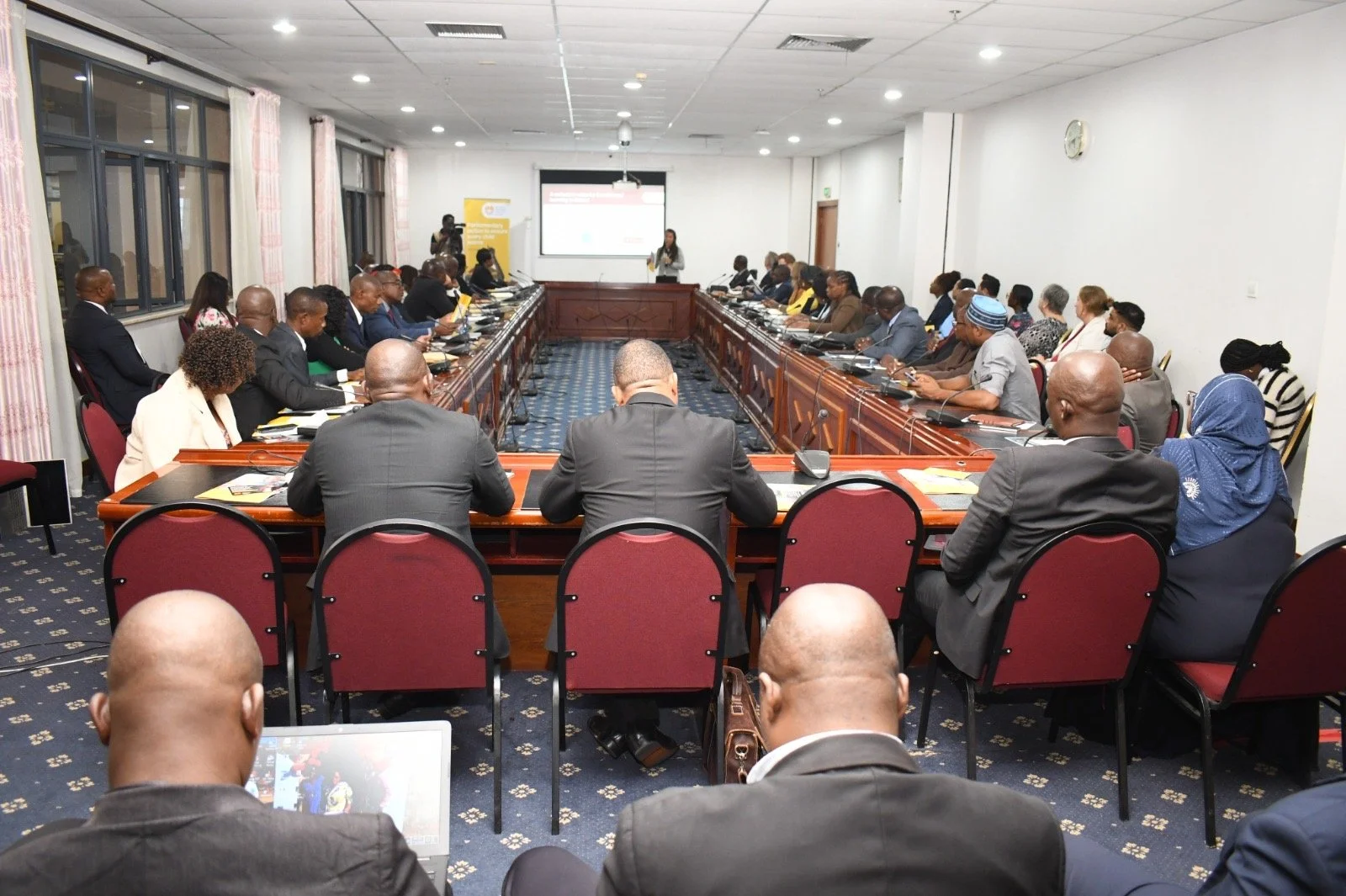
MPs, local media representatives, and education partners attending FLEX 2026
Ahead of Africa’s largest conference on foundational learning, FLEX 2026, IPNEd launched a new policy briefing in the Malawian Parliament informed by the latest evidence from global education experts.
Over 30 MPs attended the event, where the Hon. Mutani Tambala MP announced a national inquiry into why children are failing to acquire foundational learning skills.
IPNEd and the Global Education Evidence Advisory Panel (GEEAP) have partnered to support and work with MPs in Malawi to share further evidence and translate findings into action through the inquiry.
The Global Education Evidence Advisory Panel (GEEAP) and the International Parliamentary Network for Education (IPNEd) are working together to bring evidence on what works to improve literacy learning to parliamentarians in Malawi.
On the eve of the Africa Foundational Learning Exchange (FLEX) 2026 in Lilongwe, IPNEd launched Are Our Children Learning?, a new briefing on foundational learning in Malawi. Endorsed by nine local and international organisations, the briefing highlights the scale of the learning challenge and references the GEEAP-endorsed report “Effective Reading Instruction in Low- and Middle-Income Countries” to share evidence and recommend actions that can strengthen literacy outcomes
The recommendations are informed by synthesis of 151 studies of what has worked to improve literacy across Africa, Asia, Latin America and the Caribbean, and the Middle East, covering more than 167 languages. The evidence identifies that direct, systematic instruction is needed across six core components, and the report highlights the importance of using appropriate languages of instruction and providing structured support for teachers.
By engaging members of parliament directly, the briefing seeks to connect global evidence with national decision-making and support parliamentary action on one of Malawi’s most urgent education challenges: ensuring that children are in school and gaining the foundational skills they need to learn.
At the launch event, attended by more than 30 MPs, local media representatives, and education partners, the Chairperson of the Parliamentary Committee on Education, Science and Technology, Hon. Mutani Tambala MP, announced that the committee would undertake a national inquiry into why many children are failing to acquire foundational literacy and numeracy skills despite increased access to education.
“Access to school alone is not ensuring that children actually learn,” said Hon. Tambala. “This inquiry will help us understand the gaps and ensure accountability for delivering learning for every child.”
The announcement marks an important milestone. Parliamentary inquiries can play a critical role in translating evidence into policy action, budget scrutiny, and government accountability. The proposed inquiry also aligns closely with a key recommendation from GEEAP’s evidence on effective reading instruction: that governments make a national commitment to ensuring all children become skilled readers through effective, evidence-based teaching.
“The GEEAP report shows that improving early grade learning is possible,” said Ms. Beth Gum, Senior Policy & Advocacy Adviser at IPNEd. “We are excited to share that evidence with the Committee and support its work as it develops recommendations through the inquiry process.”
Mr. Joseph Nhan-O’Reilly, Executive Director of IPNEd, emphasised the importance of pairing political commitment with practical solutions.
“We’re working hard to help political leaders understand the challenge of ensuring that children learn to read and count in the early grades and why it’s such a critical one,” he said. “However, understanding the problem is not enough. We also want to equip leaders with robust evidence that the problem is solvable. That’s why we’re excited to share the important evidence that GEEAP is producing.”
Ms. Maria Brindlmayer of the GEEAP Secretariat welcomed the development, noting the unique role that parliamentarians can play in driving change.
“Parliamentary inquiries are a powerful way to widen and deepen political action on foundational learning,” she said. “We look forward to working with IPNEd in supporting and working with MPs in Malawi and beyond to share evidence and translate it into policies that accelerate learning progress for all children.”
Malawi is only the second parliament in Africa to launch a national inquiry into foundational learning, with Zambia being the first. The inquiry signals growing parliamentary momentum in the region to address the learning crisis using evidence-informed action, and demonstrates how research, political leadership, and accountability can come together to improve outcomes for children.
Access the policy briefing here and the full GEEAP-endorsed literacy report here.
